
What's Happening?
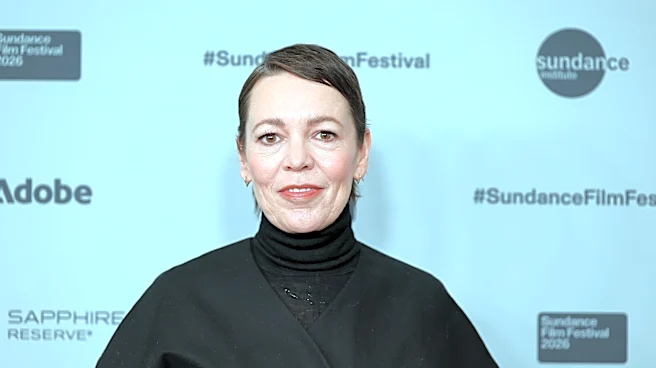
Olivia Colman stars as a solitary Fisherwoman in the new romance-fantasy comedy-drama film 'Wicker,' which premiered at the Sundance Festival. The plot centers on her character commissioning a Basket Weaver,
played by Peter Dinklage, to create a Wicker husband, portrayed by Alexander Skarsgård. The film, directed by Alex Huston Fischer and Eleanor Wilson, explores themes of sex, marriage, and societal conventions within a small, conservative village setting. Colman's character, ostracized by her community, seeks companionship by having a husband custom-made, leading to jealousy and upheaval among the villagers. The movie has been described as a 'soaring adult fable' that is funny, sexy, and touching, with strong performances from its lead actors. The Wicker husband is depicted as a perfect, kind, and loving partner, contrasting sharply with the local men and sparking significant reactions from the community.
Why It's Important?
The film 'Wicker' highlights the growing appeal of romantic media and its influence on perceptions of relationships and intimacy, particularly in the U.S. A report from dating app Feeld, developed with the Kinsey Institute and sex researcher Dr. Justin Lehmiller, indicates that 56% of participants' ideas about relationships are shaped by romantic films and TV shows. This trend is notably increasing among Gen Z men, with 59% consuming romance media. Dr. Lehmiller suggests this rise in romantic fantasies, especially post-pandemic, stems from a desire for deeper connection and a sense of belonging. The film's narrative, where an outcast finds acceptance and understanding through an unconventional partner, resonates with a fundamental human need to be seen and valued, which many feel is lacking in their daily lives. This cultural shift suggests that media like 'Wicker' are not just entertainment but also serve as a means for individuals to explore and understand relational dynamics.
What's Next?
The release of 'Wicker' and its exploration of unconventional relationships could further fuel discussions around modern dating and societal expectations. As romantic media continues to influence perceptions, there may be an increased demand for diverse and nuanced portrayals of love and partnership in film and television. The film's success, particularly its ability to resonate with a broad audience including Gen Z men, might encourage more productions that delve into complex romantic themes outside traditional norms. Additionally, the insights from the Feeld and Kinsey Institute report could prompt dating platforms and relationship experts to adapt their approaches, recognizing the significant role media plays in shaping users' romantic ideals and desires for authentic connection. The film's potential to spark conversations about vulnerability and acceptance could also lead to broader cultural dialogues on these topics.
Beyond the Headlines
The narrative of 'Wicker' delves into deeper societal implications, particularly the human need for belongingness and acceptance. The Fisherwoman's decision to commission a husband reflects a profound longing for connection when conventional avenues fail. This act challenges the rigid social structures and judgmental attitudes prevalent in her village, mirroring real-world struggles against social ostracization and the pursuit of authentic relationships. The film subtly critiques societal pressures and the often-unrealistic expectations placed on individuals regarding love and partnership. The 'slow burn' aspect of attraction, highlighted by Dr. Lehmiller, suggests a cultural preference for relationships that develop gradually, emphasizing emotional depth over instant gratification. This contrasts with the fast-paced nature of modern dating and highlights a yearning for more meaningful, vulnerable connections, which media like 'Wicker' can both reflect and reinforce.