






What's Happening?
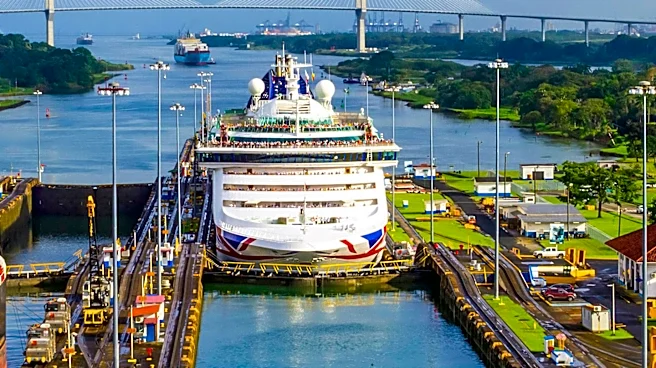
A shipowner reportedly paid over $5 million for a single transit slot through the Panama Canal, an auction premium paid by a liquefied petroleum gas (LPG) carrier operated for South Korea's SK Gas. This record-breaking fee, surpassing previous bids of
approximately $4 million, highlights the severe distortions in global shipping markets. The surge in prices is driven by a combination of factors: increased demand due to cargo rerouting caused by Middle East disruptions, and reduced transit capacity in the Panama Canal due to water shortages linked to El Niño. The Panama Canal Authority has observed rising traffic, higher demand for reservations, and increased use of its transit auction system as shipowners seek to navigate these challenges.
Why It's Important?
This unprecedented transit fee signals a significant escalation in shipping costs, which could have far-reaching implications for global logistics and consumer prices, particularly in the U.S. The U.S. is a major user of the Panama Canal, and increased costs for energy and container shipping will inevitably be passed on to consumers. The upcoming peak Christmas shipping rush, combined with constrained canal capacity and ongoing Middle East disruptions, is expected to intensify these pressures. The cost of shipping a 40-foot equivalent container from the Far East to the U.S. has already quadrupled year-over-year, with further increases anticipated, especially for services to the U.S. Gulf and East coasts that rely on the Panama Canal. This situation reduces the effective supply of available ships, impacting the entire global shipping network.
What's Next?
Shipping pressures are expected to intensify as the holiday shopping season progresses, with container carriers potentially competing more directly with energy exporters for scarce canal capacity. This competition will likely drive auction premiums even higher, benefiting those willing to pay the most while others face longer waiting times, increased operating costs, or further route adjustments. Businesses and consumers should anticipate continued volatility and elevated costs in international shipping. The situation may also accelerate the exploration of alternative shipping routes and modes of transport, as well as a re-evaluation of global supply chain strategies to build greater resilience against such disruptions. The interconnectedness of global chokepoints means that disruptions in one region, like the Middle East, can have ripple effects across the entire maritime network, including the Panama Canal.
Beyond the Headlines
The record-breaking Panama Canal transit fee serves as a stark indicator of the fragility of global supply chains in the face of converging environmental and geopolitical crises. It highlights a systemic issue where critical maritime chokepoints, traditionally viewed in isolation, are now demonstrating their interconnectedness. A disruption in one region, such as the Middle East, can quickly amplify constraints in another, like the Panama Canal, leading to cascading effects across the entire network. This situation raises fundamental questions about the long-term sustainability of current global trade models and the need for greater investment in resilient infrastructure and diversified logistics. It also underscores the economic consequences of climate change, as El Niño-induced water shortages directly impact a vital artery of international commerce, forcing a re-evaluation of environmental policies and their economic implications.