


What's Happening?
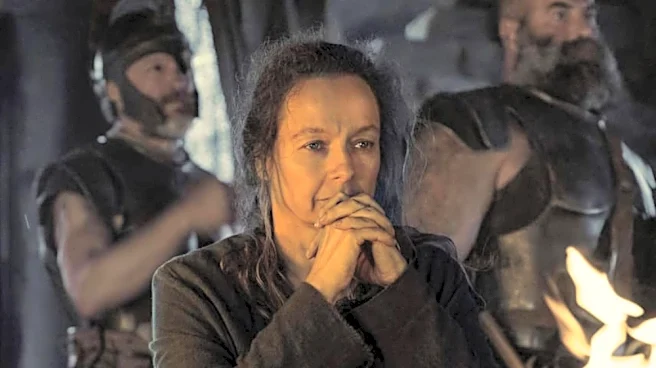
Christopher Nolan's adaptation of 'The Odyssey' presents a reimagined version of Circe, a character traditionally depicted as an immortal goddess in Homer's epic. In this film, Circe, portrayed by Samantha Morton, is depicted as a more earthy and human
figure, diverging from the classical portrayal. The film emphasizes Circe's role as a symbol of resistance against patriarchal values, a theme explored in feminist retellings of 'The Odyssey.' In the film, Circe transforms Odysseus' men into pigs, a metaphor for their true nature, as they have committed acts of violence and pillage. This portrayal aligns with modern feminist interpretations, such as Madeline Miller's novel 'Circe,' where the character is empowered to assert her will in a hostile world.
Why It's Important?
The film's portrayal of Circe as a figure of empowerment and resistance against male aggression reflects broader societal discussions on gender dynamics and the re-evaluation of historical narratives. By presenting Circe as a survivor who challenges the actions of Odysseus' men, the film contributes to ongoing conversations about women's roles in literature and society. This adaptation may influence how audiences perceive classical texts and their relevance to contemporary issues, particularly in highlighting the consequences of unchecked male entitlement and violence. The film's feminist lens offers a critique of traditional gender roles and underscores the importance of reinterpreting historical narratives to reflect modern values.
What's Next?
The film's release may spark discussions among scholars, critics, and audiences about the portrayal of female characters in classical literature and their adaptations. It could lead to further exploration of feminist themes in other classical works and inspire new adaptations that challenge traditional narratives. Additionally, the film may influence future cinematic portrayals of mythological figures, encouraging filmmakers to explore diverse perspectives and themes. The reception of the film could also impact the broader film industry, prompting a reevaluation of how female characters are depicted in historical and mythological contexts.
Beyond the Headlines
Nolan's adaptation of Circe not only challenges traditional portrayals but also raises questions about the ethical implications of storytelling and the power dynamics inherent in mythological narratives. By presenting Circe as a character who exposes the true nature of Odysseus' men, the film invites viewers to reconsider the moral complexities of heroism and villainy. This approach highlights the potential for classical stories to serve as vehicles for social commentary and cultural critique, encouraging audiences to reflect on the enduring impact of these narratives on contemporary society.