




What's Happening?
Artificial intelligence is increasingly being deployed in recruitment processes, moving beyond efficiency tasks to making critical decisions about job applicants. While AI can streamline operations like writing job descriptions, searching for candidates,
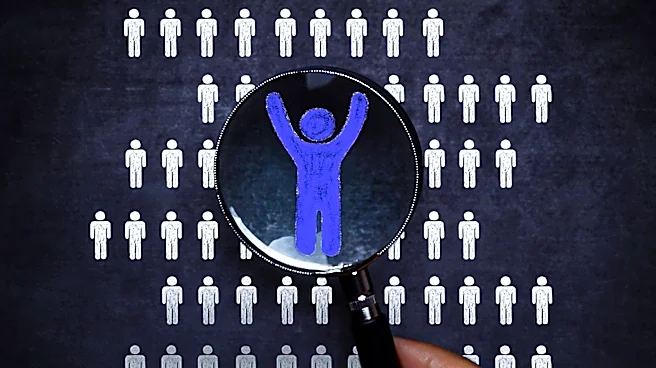
and summarizing resumes, its use in screening and filtering applications, evaluating candidates, and producing rankings is raising significant concerns. This shift means AI systems can remove candidates from consideration before a human recruiter ever reviews their application, potentially impacting access to employment opportunities. The European Union's AI Act classifies certain AI systems used in employment as high-risk, acknowledging the profound impact automated decisions can have on an individual's life. The core issue is that while employment law has established boundaries for human hiring decisions, AI introduces a new challenge: who is accountable when an algorithm, rather than a person, effectively makes a decision that prevents a candidate from progressing?
Why It's Important?
The widespread adoption of AI in recruitment has profound implications for the U.S. job market and workforce. It introduces a new layer of complexity to employment law and anti-discrimination efforts, as it becomes difficult to pinpoint accountability when an AI system makes a biased decision. If historical hiring patterns contain biases, AI algorithms, trained on this data, could inadvertently perpetuate and scale these biases across thousands of applications, potentially disadvantaging certain groups. This could lead to a less diverse workforce and limit opportunities for individuals with unconventional backgrounds or transferable skills, despite companies often stating a desire for such candidates. The efficiency gains offered by AI are undeniable, but if these gains come at the cost of equitable access to employment or reinforce existing inequalities, the societal and economic consequences could be substantial, affecting individual livelihoods and broader economic mobility.
What's Next?
As AI continues to integrate into recruitment, there will likely be increased scrutiny and calls for greater transparency regarding how these systems are designed, what criteria they evaluate, and their influence on hiring decisions. Regulatory bodies in the U.S. may follow the EU's lead in classifying recruitment AI as high-risk, potentially leading to new legislation or guidelines to address issues of bias, accountability, and fairness. Companies will face pressure to audit their AI recruitment tools for discriminatory outcomes and to implement mechanisms that allow for human oversight and intervention. Candidates may also demand more clarity on whether their applications were rejected by an algorithm or a person. The development of AI tools that prioritize fairness and explainability, alongside efficiency, will be crucial. Furthermore, there may be a growing need for educational initiatives to help both employers and job seekers understand the capabilities and limitations of AI in the hiring process.
Beyond the Headlines
The ethical dimensions of AI in recruitment extend beyond mere bias to the fundamental question of human agency and opportunity. When AI systems become gatekeepers to employment, they can subtly redefine what constitutes a 'qualified' candidate, potentially narrowing the scope of talent and innovation. This raises concerns about the long-term impact on social mobility and the perpetuation of existing socio-economic structures. The 'black box' nature of some AI algorithms means that the rationale behind certain hiring decisions might be opaque, challenging traditional notions of due process and fairness in employment. Moreover, the reliance on AI could diminish the human element of recruitment, where intuition, empathy, and the ability to see potential beyond a resume play a vital role. Society will need to grapple with how to balance technological advancement and efficiency with the imperative to ensure equitable access to opportunities and to preserve the human values that underpin a just labor market.