




What's Happening?
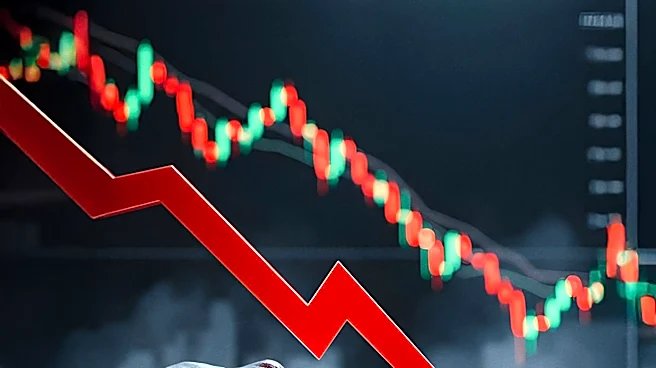
The U.S. stock markets experienced a significant downturn, with the tech-heavy Nasdaq Composite erasing all of its gains for 2026. Concurrently, both the S&P 500 and the Dow Jones Industrial Average entered correction territory, indicating a decline of 10%
from their recent peaks. This market plunge reflects a broad-based sell-off across various sectors, particularly impacting technology stocks that had previously driven much of the year's growth. The rapid reversal in market fortunes has left investors assessing the underlying causes and potential future implications for the U.S. economy. The event, reported by NBC News' Brian Cheung, occurred on November 20, 2026, highlighting a volatile period in financial markets.
Why It's Important?
This market correction is significant as it signals a potential shift in investor sentiment and economic outlook. The Nasdaq's loss of all 2026 gains, coupled with the S&P 500 and Dow entering correction territory, could impact retirement accounts, investment portfolios, and consumer confidence across the U.S. Businesses, especially those in the technology sector, may face increased scrutiny and pressure on their valuations. A sustained downturn could lead to reduced corporate spending, hiring freezes, and a general slowdown in economic activity. Conversely, some investors might view this as a buying opportunity, anticipating a rebound. The event underscores the inherent volatility of financial markets and the interconnectedness of global economic factors.
What's Next?
Following this market plunge, investors and analysts will closely monitor economic indicators, corporate earnings reports, and any policy statements from the Federal Reserve. There may be increased calls for government intervention or reassessment of current economic policies if the downturn persists. Companies, particularly those in the technology sector, might adjust their growth forecasts and investment strategies. Individual investors are likely to re-evaluate their portfolios, potentially shifting towards more conservative assets. The market's reaction in the coming days and weeks will be crucial in determining whether this is a temporary correction or the beginning of a more prolonged bear market, influencing financial decisions for millions of Americans.
Beyond the Headlines
The recent market correction extends beyond immediate financial losses, potentially influencing broader societal and political landscapes. A prolonged economic downturn could exacerbate wealth inequality, as those with significant investments bear the brunt of the losses, while others may see their job security or retirement savings diminish. Politically, a struggling economy could become a central issue in upcoming elections, with incumbents facing pressure to address financial instability. Culturally, periods of economic uncertainty often lead to shifts in consumer behavior, with a greater emphasis on saving and essential spending. This market event could also prompt a re-evaluation of the regulatory framework governing financial markets, particularly concerning the rapid growth and valuation of tech companies.