
What's Happening?
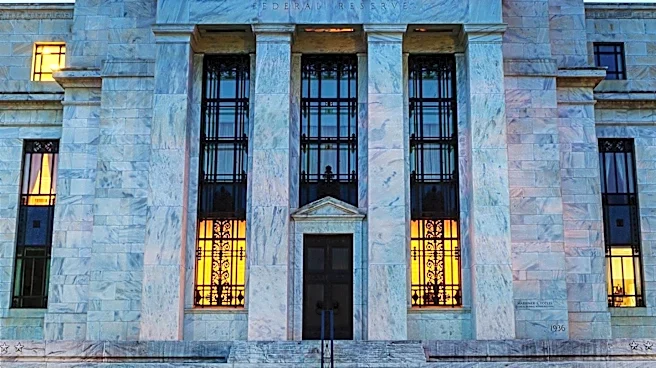
The Federal Reserve has proposed a supervisory framework for payment stablecoin issuers, aiming to advance the regulatory structure around blockchain-based dollars. This proposal outlines application,
risk-management, and supervisory expectations for issuers operating under its oversight. While the framework is not a final approval for every stablecoin model, it represents a significant step towards integrating stablecoins into the regulated financial system. The objective is to make tokenized cash more acceptable to banks, payment firms, and asset managers by providing clearer rules. This initiative is part of a broader trend in crypto regulation for 2026, which indicates a global tightening of rules with a focus on stablecoins, custodial standards, anti-money-laundering (AML), and know your customer (KYC) alignment. The proposal is currently subject to the regulatory process and has not yet been finalized.
Why It's Important?
This proposed framework from the Federal Reserve is important because it addresses a critical gap in the U.S. regulatory landscape for stablecoins, which are a cornerstone of the crypto economy. By establishing clear supervisory expectations, the Federal Reserve aims to mitigate risks associated with stablecoins, such as reserve management, operational resilience, and consumer protection. This move could significantly enhance the credibility and stability of payment stablecoins, making them more attractive for institutional adoption and integration into traditional financial services. For the U.S. economy, clearer rules could encourage more capital to flow into on-chain activities, potentially benefiting platforms that facilitate tokenized finance. It also signals a proactive approach by a major U.S. financial regulator to manage the evolving digital asset space, which could influence international regulatory standards. The framework's focus on risk management and supervision is crucial for preventing financial instability and ensuring that stablecoins can function reliably as a medium of exchange.
What's Next?
The Federal Reserve's proposed framework will undergo a regulatory process, which typically involves a period for public comment and potential revisions before finalization. During this phase, stakeholders, including stablecoin issuers, financial institutions, and consumer advocacy groups, will likely provide feedback that could shape the final rules. Once finalized, the framework will require payment stablecoin issuers to adapt their operations, governance, and compliance programs to meet the new supervisory expectations. This could lead to increased compliance costs but also greater legitimacy and market access. The clarity provided by these rules could also spur further innovation in the PayFi (payments and finance) sector, as companies develop solutions that bridge the gap between blockchain value and traditional banking. The success of this framework will be closely watched by other global regulators and could set a precedent for how stablecoins are regulated worldwide.
Beyond the Headlines
Beyond the immediate regulatory implications, the Federal Reserve's proposal reflects a deeper recognition of stablecoins' potential to reshape the U.S. payment system and broader financial infrastructure. By bringing stablecoins under a supervisory framework, the Fed is implicitly acknowledging their role as a form of digital money, albeit one issued by private entities. This move raises fundamental questions about the future of money, the role of central banks in a digital economy, and the balance between innovation and financial stability. Ethically, the framework aims to protect consumers and prevent illicit activities by ensuring transparency and accountability from issuers. Legally, it represents an attempt to apply existing regulatory principles to a new technological paradigm, which could set precedents for future digital asset regulations. Culturally, it signifies a gradual shift in perception, moving stablecoins from the fringes of finance to a more integrated, albeit regulated, component of the mainstream financial system. The long-term impact could be a more robust and efficient digital payment ecosystem in the U.S., but also one with increased oversight and potential limitations on certain decentralized models.