




What's Happening?
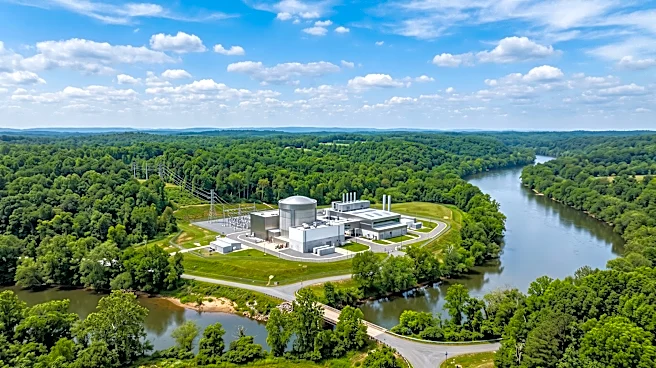
Geenex Power, a North Carolina-based energy developer, is proposing to build a small modular reactor (SMR) project, named Beck Creek Energy, in Amherst County, Virginia. The proposed SMR would provide up to 650 megawatts of zero-carbon electricity, making
it potentially the first operating SMR in Virginia and one of the first in the nation. The company plans to construct the facility on an approximately 250-acre property in eastern Amherst County, situated between Joshua Falls Road and a bend of the James River, south of Galts Mill Road. This location was chosen due to its proximity to Appalachian Power’s Joshua Falls electric substation and a high-voltage transmission line capable of handling the project's power capacity. Geenex Power, which typically focuses on solar power and battery storage, announced its entry into the nuclear market in February and is now actively pursuing SMR development. The company aims to submit a local permitting application in 2027, with construction potentially beginning in the early 2030s.
Why It's Important?
This proposed SMR project is significant for Virginia's energy landscape and the broader U.S. nuclear industry. If realized, it would mark a crucial step in diversifying the state's energy portfolio with a reliable, carbon-free power source. SMRs offer advantages over traditional nuclear reactors, including smaller physical footprints, reduced capital investment, and the flexibility to be incrementally added to meet increasing electricity demand. This is particularly relevant given Virginia's growing demand for electricity, driven by the expansion of data centers, including hyperscale facilities for AI. The project could also bring substantial economic benefits to Amherst County, such as improved economic growth and an increase in local permanent job structures. Furthermore, the initiative highlights the ongoing 'race' to build the first SMRs in the U.S., with several companies and utilities exploring similar projects. Geenex's proactive community engagement strategy, emphasizing transparency and local support, is critical for the successful adoption of advanced nuclear technologies.
What's Next?
Geenex Power plans to submit a local permitting application for the Beck Creek Energy project in Amherst County in early 2027. The project will also require state and federal regulatory approvals, including from the U.S. Nuclear Regulatory Commission (NRC), and will need to enter the queue process with PJM Interconnection for grid connection approval. The company anticipates construction could begin in the early 2030s, if not sooner, assuming all approvals are secured and local support is garnered. Geenex is committed to extensive community engagement, with the first informational meetings possibly held next month, to foster open dialogue and address local concerns. While Geenex is a site developer that focuses on permitting and community outreach, it will eventually identify a partner company to build and operate the nuclear plant. The project's estimated cost is expected to be upwards of $1 billion. Other entities, such as Appalachian Power and Dominion Energy, are also exploring SMR development in Virginia, indicating a competitive but growing market for this technology.
Beyond the Headlines
The proposed Beck Creek Energy project in Amherst County reflects a broader national trend towards embracing advanced nuclear technologies as a solution to climate change and increasing energy demands. The emphasis on community engagement by Geenex Power underscores the evolving approach to nuclear development, moving away from past controversies towards a more collaborative and transparent model. The project's success could serve as a blueprint for other rural communities considering SMRs, especially in regions with a historical connection to nuclear technology, such as Lynchburg, Virginia, which has a significant nuclear tech hub. This development also highlights the critical role of regulatory bodies like the NRC in adapting their processes to accommodate new nuclear designs, ensuring safety while facilitating innovation. The long-term implications include not only a cleaner energy grid but also potential shifts in regional economic development, workforce training, and the integration of nuclear power with other renewable energy sources. The project's progress will be a key indicator of the viability and scalability of SMRs in the U.S. energy transition.