





What's Happening?
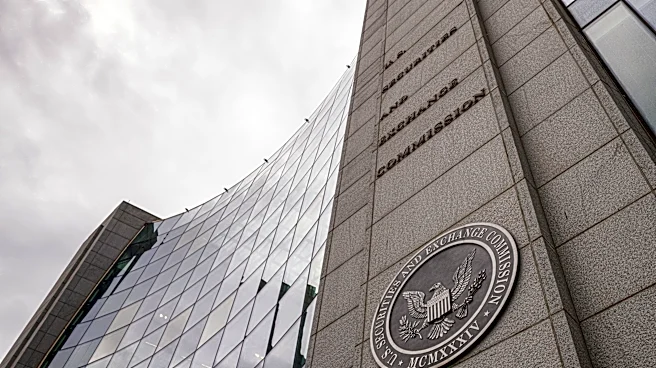
The U.S. Securities and Exchange Commission (SEC) has initiated legal action against eight Colorado-based entities. The SEC alleges that these entities orchestrated a fraudulent scheme, utilizing fake advisers, deceptive crypto trading platforms, and counterfeit
SEC certificates to illicitly obtain over $37 million from U.S. investors. This action highlights the SEC's ongoing efforts to combat fraud within the cryptocurrency sector and protect investors from deceptive practices. The lawsuit details how the entities allegedly misled investors into believing their investments were secure and regulated, leveraging the perceived legitimacy of official-looking documents and platforms. The investigation uncovered a sophisticated operation designed to exploit investor interest in digital assets while circumventing regulatory oversight.
Why It's Important?
This lawsuit is significant as it underscores the persistent risks associated with unregulated or fraudulent cryptocurrency investment schemes, particularly for U.S. investors. The alleged $37 million in losses demonstrates the substantial financial impact such scams can have on individuals. The SEC's intervention serves as a critical reminder of the importance of due diligence and caution when engaging with crypto platforms and investment opportunities. It also reinforces the regulatory body's commitment to enforcing securities laws in the digital asset space, aiming to deter similar fraudulent activities. The case could set precedents for how future crypto-related fraud cases are handled, potentially influencing investor confidence and regulatory frameworks within the U.S. financial system.
What's Next?
The legal proceedings against the eight Colorado-based entities will now move forward, with the SEC seeking to recover the defrauded funds and impose penalties. This case is likely to involve extensive discovery and potentially a trial, unless a settlement is reached. The outcome could lead to further enforcement actions against individuals or organizations involved in similar schemes. For investors, this serves as a cautionary tale, emphasizing the need to verify the legitimacy of investment platforms and advisers, especially in the volatile cryptocurrency market. The SEC's continued focus on crypto fraud suggests that more regulatory actions and investor protection initiatives are probable in the near future, aiming to bring greater transparency and accountability to the digital asset ecosystem.
Beyond the Headlines
The alleged use of fake SEC certificates in this scheme points to a deeper issue of trust and verification in the digital age. Scammers are increasingly sophisticated, mimicking official documents and platforms to lend an air of legitimacy to their operations. This incident highlights the challenge for regulatory bodies not only in identifying and prosecuting fraud but also in educating the public about how to distinguish legitimate investment opportunities from elaborate scams. The case also touches upon the broader debate surrounding cryptocurrency regulation in the U.S., as authorities grapple with how to effectively oversee a rapidly evolving and often decentralized market while fostering innovation. The long-term implications could include enhanced public awareness campaigns and more stringent verification processes for new financial technologies.