





What's Happening?
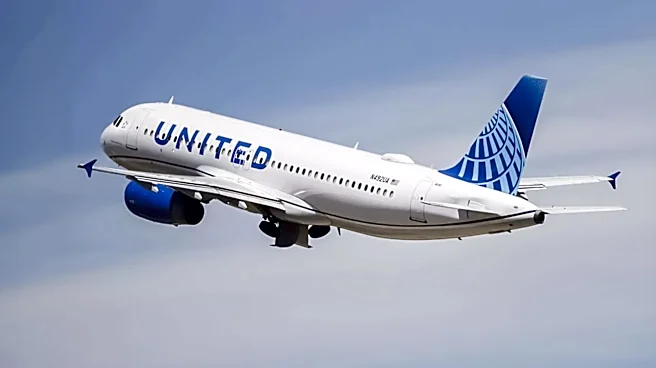
Scott Kirby, the 59-year-old CEO of United Airlines, has shared insights into his daily routine and leadership approach, emphasizing a focus on 'thinking hard' rather than merely 'working hard'. Kirby, who resides in Dallas while United's headquarters
are in Chicago, maintains a disciplined schedule that begins early without an alarm. His mornings include physical training, during which he reads emails, The Wall Street Journal, and The New York Times. He prioritizes family time, having breakfast with his children and often driving them to school. Professionally, Kirby limits his meetings to a maximum of four hours daily, ideally two to two and a half hours, to ensure ample time for strategic thought. He expresses a dislike for meetings that involve simply reviewing slides, preferring direct discussions with his leadership team. Kirby also dedicates approximately three hours daily to reading, often while walking, and has a particular interest in science fiction, which he believes helps him understand the world and anticipate events, such as the COVID-19 pandemic.
Why It's Important?
Kirby's leadership philosophy, centered on deep thinking and efficient time management, offers a contrasting perspective to the often-perceived necessity of an overloaded schedule for top executives. His ability to secure $2 billion in unsecured financing for United Airlines just before the NBA suspended its season due to COVID-19, a move he attributes to his early understanding of the pandemic's severity through reading, highlights the practical benefits of his approach. This strategic foresight allowed United to navigate the initial economic shock of the pandemic more effectively. Furthermore, his views on artificial intelligence, where he sees its value in enabling new capabilities rather than merely automating existing tasks, could influence United's technological adoption and innovation strategies. By prioritizing thoughtful decision-making and leveraging diverse information sources, Kirby aims to foster a resilient and forward-thinking corporate culture at United Airlines, potentially setting a precedent for other industry leaders.
What's Next?
Kirby's continued emphasis on strategic thinking and efficient operations is likely to shape United Airlines' future direction. His approach to AI, focusing on its potential for programming and solving previously unfeasible problems, suggests that United may explore innovative technological solutions to enhance its services and operational efficiency. This could lead to the development of new systems and processes that leverage AI for complex tasks, rather than just for mundane automation. Additionally, his commitment to understanding broader global trends through extensive reading indicates that United's long-term strategies will likely be informed by a comprehensive view of geopolitical, economic, and social developments. As he continues to travel frequently, observing other airlines and their technologies, United Airlines may also see an integration of best practices and new ideas from across the aviation industry, further refining its competitive edge and customer experience.
Beyond the Headlines
Beyond the immediate operational and strategic implications, Kirby's personal habits and leadership style shed light on the evolving demands of executive roles in complex industries. His disciplined routine, including early morning workouts and extensive reading, underscores the importance of personal well-being and continuous learning for sustained high performance. His critique of managers who equate busy schedules with productivity challenges a common corporate culture, advocating for quality of thought over quantity of meetings. This perspective could inspire a broader shift in corporate leadership towards more deliberate and reflective decision-making, potentially fostering environments where innovation and strategic foresight are valued above mere activity. His willingness to fly on competitor airlines to observe their operations also highlights a pragmatic and open-minded approach to competitive intelligence, suggesting a culture of continuous improvement and adaptability within United Airlines.