




What's Happening?
Hedge funds have significantly underperformed the S&P 500 this year, with their favorite stocks declining by 3% through November 19, while the S&P 500 gained 6% over the same period. This underperformance, as reported by Goldman Sachs after reviewing
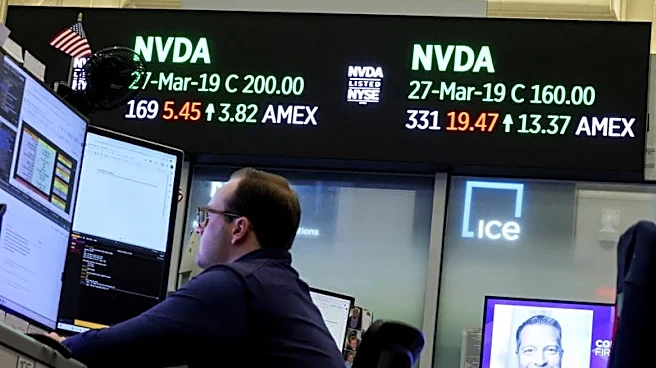
1,001 hedge funds' equity holdings, marks one of the most significant underperformances against the market in 20 years. The primary reason cited is the concentration of hedge fund portfolios in mega-cap tech firms heavily tied to the artificial intelligence buildout, such as Amazon, Meta, Microsoft, and Nvidia. The median fund had 70% of its portfolio in its top 10 positions, leading to record-high crowding in these names during the third quarter. The 'unwind of the AI trade' has been a major drag, prompting funds to diversify their holdings. In response, hedge funds have broadened their portfolios by adding financial services companies, utility providers, and industrial conglomerates, reducing their exposure to the momentum factor.
Why It's Important?
The underperformance of hedge funds and their subsequent diversification signal a notable shift in investment strategies within the U.S. financial market. For investors, this indicates that a concentrated bet on mega-cap tech and AI-related stocks, once a lucrative strategy, has become a liability, prompting a re-evaluation of risk and reward. The move towards more diversified portfolios, including sectors like financial services, utilities, and industrials, suggests a broader search for value and stability beyond the high-growth tech sector. This shift could impact the valuations of companies in these newly favored sectors, potentially driving up their stock prices. Furthermore, the 'unwind of the AI trade' highlights the inherent volatility and cyclical nature of market trends, even in rapidly growing technological areas. The struggles of hedge funds, including cuts and departures from equity teams at various firms, underscore the challenging stock-picking environment and the pressure on fund managers to adapt to changing market dynamics to generate returns for their clients.
What's Next?
In response to their recent underperformance, hedge funds are expected to continue diversifying their portfolios, moving away from heavy concentration in mega-cap tech stocks. This trend suggests a potential rebalancing of market leadership, with increased capital flows into sectors that have been less favored in recent years, such as financial services, utilities, and industrials. Investors may see continued adjustments in hedge fund allocations as managers seek to mitigate risks associated with crowded trades and capitalize on broader market opportunities. The reduced exposure to the momentum factor indicates a more cautious approach, potentially favoring value or defensive stocks. This strategic shift could lead to a more balanced market performance across different sectors, rather than the tech-led dominance seen previously. The performance of these diversified portfolios in the coming quarters will be closely watched as a gauge of whether hedge funds can regain their competitive edge and adapt effectively to the evolving economic and market landscape.
Beyond the Headlines
The hedge fund underperformance and subsequent diversification reflect a deeper market narrative beyond mere stock-picking woes. It signals a potential maturation or recalibration of the 'AI trade,' suggesting that the initial speculative fervor around artificial intelligence might be giving way to more fundamental evaluations of company performance and profitability. This could lead to a more discerning investment environment where companies with tangible AI applications and sustainable business models are favored over those with speculative growth narratives. The shift also highlights the systemic risks associated with market concentration; when a large portion of capital is funneled into a few popular stocks, any downturn in those names can have a magnified impact across the investment landscape. This situation could prompt a broader re-evaluation of portfolio construction principles, emphasizing diversification and risk management over concentrated bets on high-growth sectors. Ultimately, it underscores the dynamic nature of financial markets, where even the most sophisticated investors must constantly adapt to avoid significant losses and capture new opportunities.