
What's Happening?
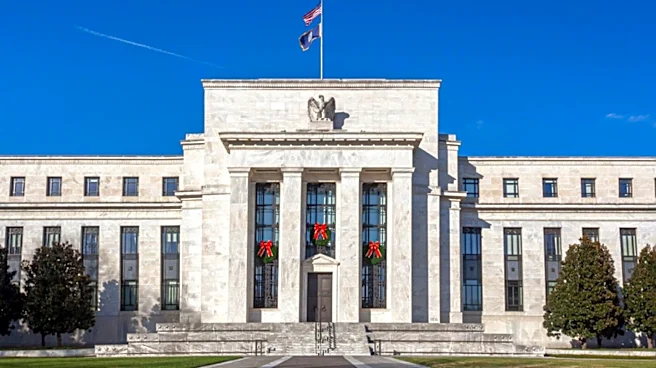
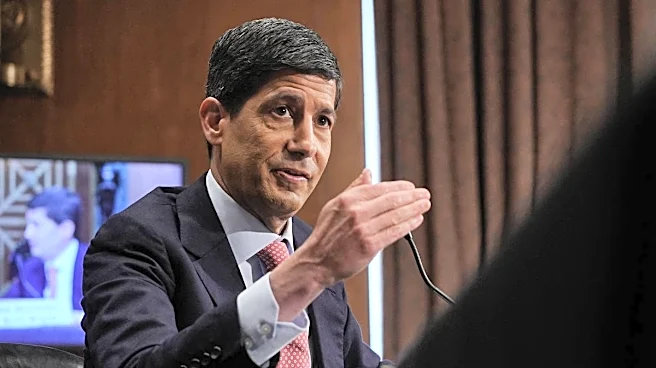
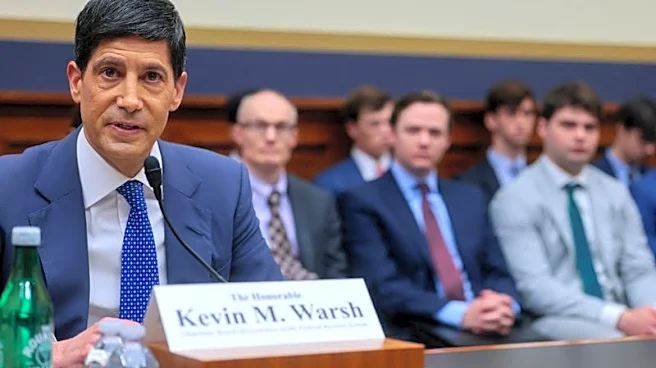
Federal Reserve Chair Kevin Warsh is under scrutiny as U.S. government bond yields surge, causing turbulence in financial markets. The increase in yields is attributed to rising inflation concerns, geopolitical
tensions, and higher oil prices, which have led to market speculation about a potential interest rate hike. The benchmark 10-year U.S. Treasury yield briefly reached 4.71%, while the 30-year Treasury's real yield hit its highest level since the global financial crisis. This rise in yields has resulted in increased borrowing costs for both households and businesses, tightening financial conditions. Warsh's communication strategy, which lacks forward guidance, has added to investor uncertainty regarding future interest rate policies. Market participants are now betting on a possible rate increase, as economic data remains strong and inflationary pressures persist.
Why It's Important?
The surge in U.S. bond yields and the potential for an interest rate hike have significant implications for the U.S. economy. Higher borrowing costs could slow down consumer spending and business investments, potentially impacting economic growth. The financial markets are closely watching the Federal Reserve's next moves, as any changes in interest rates could affect stock market valuations and investor confidence. Additionally, the uncertainty surrounding monetary policy could lead to increased market volatility, affecting both domestic and international investors. The situation also tests Warsh's leadership and the Fed's ability to manage inflation without derailing economic recovery.
What's Next?
If the volatility in bond yields continues, the Federal Reserve may need to provide clearer guidance to stabilize markets. Investors will be looking for signals from the Fed regarding its interest rate policy, especially in light of persistent inflationary pressures. The central bank's decisions in the coming months will be crucial in determining the direction of the U.S. economy and financial markets. Stakeholders, including businesses and consumers, will need to prepare for potential changes in borrowing costs and economic conditions.