






What's Happening?
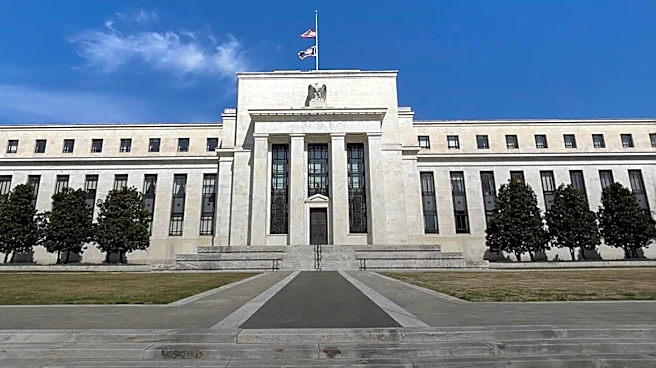
The Open Market Trading Desk (the Desk) at the Federal Reserve Bank of New York is set to conduct small value agency Mortgage-Backed Securities (MBS) operations. These exercises are designed to test the operational readiness of the Desk to implement existing
and potential policy directives from the Federal Open Market Committee (FOMC). Specifically, the Desk plans to undertake four small value agency MBS dollar roll operations on November 10, 2026, and four small value agency MBS coupon swap operations on November 12, 2026. On November 10, the Desk will sell unsettled November To-Be-Announced (TBA) positions and buy December TBA positions for 15-year UMBS 5.5 percent coupon securities, with each dollar roll operation having a face value of $5 million, totaling $20 million. On November 12, the Desk intends to swap out of unsettled November TBA positions of 30-year Ginnie Mae 6.0 percent coupons for other readily available MBS, with each coupon swap operation also having a face value of $5 million, totaling $20 million.
Why It's Important?
These small value operations are crucial for maintaining the Federal Reserve's capacity to effectively manage monetary policy and ensure financial market stability. By regularly testing its operational readiness, the Desk can confirm its ability to execute larger-scale policy directives if and when needed. This proactive approach helps to mitigate potential disruptions in the financial system and ensures that the Federal Reserve can respond swiftly to economic changes. The specific focus on agency MBS markets is significant because these markets play a vital role in the U.S. housing sector and broader financial system. The ability to smoothly conduct these transactions is essential for the Federal Reserve to influence long-term interest rates and support mortgage market liquidity, which directly impacts homeowners and the real estate industry.
What's Next?
The planned small value agency MBS operations are scheduled for November 10 and November 12, 2026. These exercises are part of the Federal Reserve's ongoing commitment to operational preparedness and do not necessarily signal an immediate change in monetary policy. The results of these tests will likely be used internally to assess and refine the Desk's procedures and systems. Future policy decisions by the FOMC will continue to be informed by broader economic data and conditions, but the successful execution of these operational tests will ensure that the Desk is ready to implement any such decisions effectively. Market participants will likely monitor these operations as an indicator of the Federal Reserve's technical capabilities and its continued engagement with the MBS market.
Beyond the Headlines
The routine nature of these 'small value' exercises belies their fundamental importance to the integrity of the U.S. financial system. They represent a continuous effort by the Federal Reserve to ensure that its tools for monetary policy implementation remain sharp and effective. In an increasingly complex and interconnected global financial landscape, the ability to execute precise and timely market operations is paramount. These tests also subtly reinforce the Federal Reserve's role as a key player in the agency MBS market, influencing its structure and liquidity. While not directly impacting interest rates or the economy in the short term, the long-term implication is a more resilient and responsive central bank, capable of navigating future economic challenges and maintaining confidence in the financial markets.