




What's Happening?
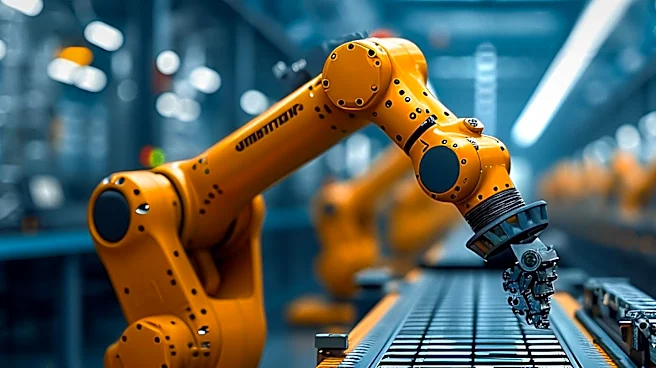
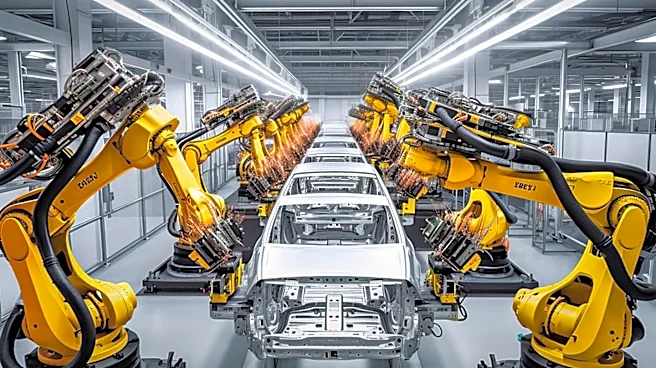
Hadrian, a company focused on reindustrializing America through autonomous factories, is actively seeking a Quality Engineering Manager in Los Angeles, CA. The company utilizes AI, advanced software, robotics, and full-stack manufacturing to produce mission-critical
systems for aerospace and defense sectors, including rockets, satellites, aircraft, and ships. Hadrian aims to accelerate production by up to tenfold and significantly reduce costs. Following a $1.37 billion Series D funding round, which valued the company at $7.87 billion, Hadrian is expanding its manufacturing capabilities. This expansion includes new ventures in welding, casting, forging, electronics, and additive manufacturing, alongside scaling its Factory-as-a-Service platform. The Quality Engineering Manager will be responsible for leading a team to ensure all products meet customer, regulatory, and AS9100 requirements from initial prototypes through full-rate production. This role reports to the Quality Director and involves overseeing quality engineering for various processes such as Tube & Pipe, Welding, NDT, Assembly, and Sheet Metal, including compliance with NAVSEA standards.
Why It's Important?
This hiring initiative by Hadrian is significant for the U.S. manufacturing landscape, particularly within the aerospace and defense industries. By investing in autonomous factories and advanced manufacturing techniques, Hadrian is contributing to the reshoring of critical production capabilities, which enhances national security and reduces reliance on foreign supply chains. The role of a Quality Engineering Manager is crucial in this context, as it directly impacts the reliability and safety of components used in sensitive applications like rockets and aircraft. Ensuring adherence to stringent standards like AS9100 and NAVSEA is paramount for these industries, where failure can have catastrophic consequences. The expansion of Hadrian's manufacturing footprint also signals job creation in high-tech manufacturing sectors, fostering innovation and skill development within the American workforce. This move supports the broader goal of strengthening the U.S. industrial base and maintaining a competitive edge in advanced manufacturing globally.
What's Next?
Hadrian's continued expansion suggests a future trajectory focused on further integrating AI and robotics into manufacturing processes to achieve greater efficiency and precision. The successful hiring and integration of a Quality Engineering Manager will be critical for maintaining high standards as the company scales its operations and diversifies its manufacturing capabilities. This will likely involve developing more robust quality control systems, implementing advanced inspection technologies, and fostering a culture of continuous improvement across all production lines. As Hadrian expands its Factory-as-a-Service platform, it may attract more aerospace and defense clients seeking faster, more cost-effective, and highly reliable manufacturing solutions. This could lead to increased demand for skilled labor in engineering, robotics, and quality assurance, further boosting employment in the U.S. manufacturing sector. The company's growth could also spur further investment in related technological advancements, driving innovation in industrial automation and materials science.
Beyond the Headlines
The broader implications of Hadrian's growth extend to the strategic re-evaluation of manufacturing paradigms in the U.S. The emphasis on autonomous factories represents a shift towards Industry 4.0 principles, where digital technologies, automation, and data exchange are integrated into industrial processes. This transformation could lead to a more resilient and agile manufacturing ecosystem, less susceptible to labor shortages or geopolitical disruptions. Ethically, the increased automation raises questions about the future of human labor in manufacturing, necessitating a focus on workforce retraining and upskilling to adapt to new roles that involve overseeing and managing advanced robotic systems. Legally, ensuring the safety and reliability of AI-driven manufacturing processes will require evolving regulatory frameworks, especially in highly regulated sectors like aerospace and defense. Culturally, the reindustrialization effort could foster a renewed appreciation for domestic production and technological self-sufficiency, influencing public policy towards greater support for advanced manufacturing initiatives.