

What's Happening?
Tesla's Full Self-Driving (FSD) v15 update has been rolled out to customers, with its new 'Reality View' visualization feature garnering significant attention. This feature replaces traditional driving visualizations with a realistic, live representation
of the vehicle's surroundings, generated by the same artificial intelligence (AI) model that drives the car. Tesla's AI chief Ashok Elluswamy noted that Reality View serves to communicate the car's intentions, displaying arrows for upcoming turns and pins for parking spots. While visually impressive, some observers question the immediate practical benefits for drivers, suggesting it might be more of a 'gamification' feature. The FSD v15 update also claims to improve the critical intervention rate by 25x, attributed to a new vision encoder trained on millions of internet videos, and enhances parking, driver monitoring, and object detection.
Why It's Important?
The focus on Tesla's FSD v15 Reality View highlights a broader debate within the autonomous vehicle industry regarding the balance between advanced technological capabilities and practical user experience. While the visual fidelity of Reality View is striking, its perceived lack of immediate tangible benefits for safe driving raises questions about resource allocation in AI development. If a significant portion of development effort is directed towards features that are more 'cool' than critical, it could impact the pace of progress on core safety and reliability aspects of autonomous driving. For consumers, the emphasis on such a feature might create a perception that FSD is more about entertainment than a robust, fully autonomous solution, potentially influencing adoption rates and public trust in self-driving technology. This also impacts the competitive landscape, as other manufacturers might prioritize different aspects of autonomous development.
What's Next?
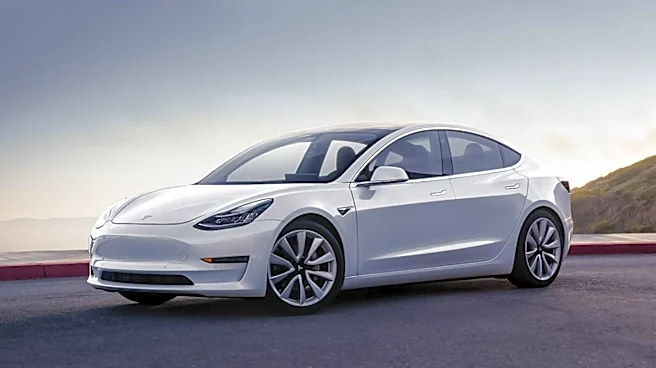
Tesla is expected to continue refining FSD v15, with Elon Musk acknowledging that the current Reality View's latency can be improved with future updates, though this may come at a cost in compute power. The company will likely face ongoing scrutiny regarding the practical utility of features like Reality View versus the core performance and safety improvements of FSD. There's also an open question about whether Reality View will become available to non-FSD users for features like parking assistance. The exclusion of Model 3 vehicles from the initial FSD v15 rollout, despite similar hardware, suggests a strategic deployment that may evolve. Future updates will likely aim to address current limitations, such as the need for active driver supervision and occasional driving inconsistencies, as Tesla works towards a wider release of the software.
Beyond the Headlines
The discussion around Tesla's FSD v15 Reality View extends beyond mere functionality to touch upon the psychological aspects of human-AI interaction in vehicles. The 'gamification' aspect, as some describe it, could inadvertently lead to driver distraction or a false sense of security, shifting attention from the road to the in-car display. This raises ethical questions about how automotive AI should be designed to inform and assist drivers without overwhelming or misleading them. Furthermore, the computational demands of such high-fidelity visualizations, particularly on Hardware 4 vehicles, underscore the increasing power requirements for advanced in-car systems. This trend could influence vehicle design, energy consumption, and the overall environmental footprint of future automobiles, prompting a reevaluation of what constitutes essential versus auxiliary features in autonomous driving.