





What's Happening?
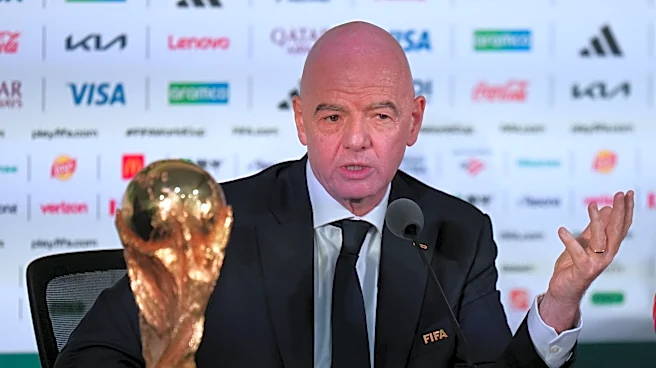
FIFA is moving forward with its proposal to introduce private investment into its commercial operations, despite opposition from UEFA and other football confederations. The plan involves creating a new subsidiary, FIFA Forward Enterprise, valued at $20
billion, to manage revenue-generating activities like broadcasting rights and sponsorships. FIFA aims to retain majority ownership and governance control while offering a minority stake to investors for $4.2 billion in new capital. UEFA has unanimously voted to boycott FIFA competitions as long as the proposal is active, citing concerns over privatization and the impact on football's priorities. CONCACAF and the Asian Football Confederation have also expressed reservations, highlighting issues with transparency and consultation.
Why It's Important?
The proposal could significantly alter the commercial landscape of global football, affecting the sustainability of continental competitions. UEFA's boycott could impact major tournaments, including the 2030 World Cup. The plan follows record revenues from the 2026 World Cup, suggesting FIFA's intent to expand development funding for its member associations. However, critics argue that introducing private investors could shift the focus from sporting priorities to commercial returns, potentially leading to larger, more frequent tournaments. The initiative reflects a broader power struggle between FIFA and UEFA over the future direction of world football.
What's Next?
FIFA plans to continue consulting its member associations, with a deadline of September 19 for participation in the funding program. Final approval requires majority support from FIFA's Congress and Council. UEFA's boycott stance could lead to further tensions and negotiations. FIFA's collaboration with JPMorgan and investors linked to Joshua Kushner indicates a strategic move to secure long-term partners. The outcome of this proposal could redefine governance and commercial strategies in football.