

What's Happening?
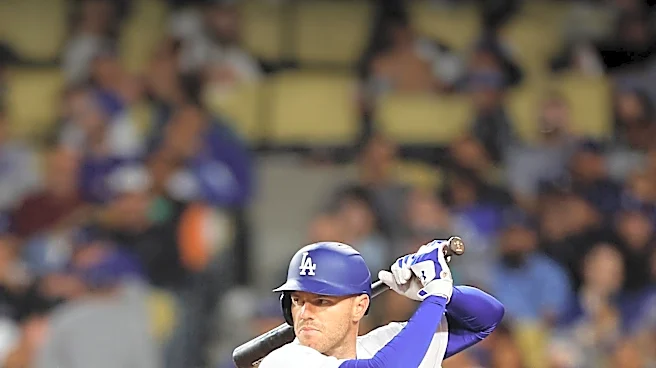
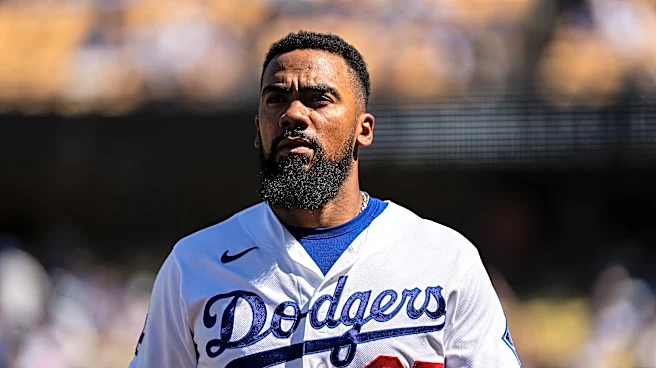
Los Angeles Dodgers first baseman Freddie Freeman has ended a significant 47-game homerless drought, hitting his first home run since July 4th during a game against the St. Louis Cardinals. This three-run home run in the first inning gave the Dodgers an early
3-0 lead. Despite this power outage, Freeman has maintained a strong batting average of .303 and has accumulated 63 RBIs over 135 games this season. He has consistently stated that he will not alter his hitting approach to chase extra-base hits, emphasizing his preference for being a high-average hitter rather than sacrificing contact for power. This drought was the longest of his career, drawing attention to a broader slugging issue within the Dodgers' offense, which has seen a collective dip in home run production since July.
Why It's Important?
Freeman's return to home run hitting is significant for the Los Angeles Dodgers as they approach the postseason. A lack of slugging has been identified as a major concern for the team, with several key players experiencing a power dip. While Freeman's overall offensive production has remained high, his home run output is on pace to be his lowest in a Dodgers uniform. The team's ability to win games without relying heavily on home runs becomes more challenging, increasing the pressure on pitching and defense. If Freeman and other power hitters can regain their slugging form, it would provide a crucial boost to the Dodgers' World Series aspirations, offering more margin for error in tight games and against strong postseason opponents.
What's Next?
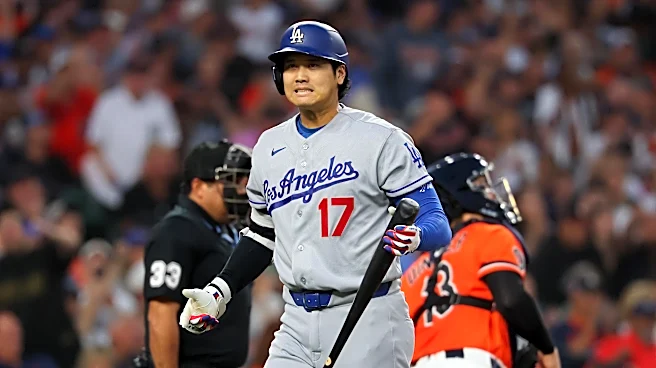
The Dodgers will be looking for Freeman to continue contributing power as they finalize their push for the National League West Division title and prepare for the postseason. His commitment to his consistent hitting approach suggests that while home runs may not be his primary focus, his overall offensive contributions will remain vital. The team will need to address its collective slugging issues, as the lack of power has made them vulnerable. The performance of other key hitters like Mookie Betts, Max Muncy, and Shohei Ohtani in the coming weeks will also be critical to determine if the Dodgers can consistently generate runs through extra-base hits, which is often essential for deep postseason runs.
Beyond the Headlines
Freeman's steadfast refusal to change his hitting philosophy, even during a prolonged power drought, highlights a fundamental debate in baseball: the balance between contact hitting and power. In an era increasingly dominated by home runs and slugging percentages, Freeman's dedication to his high-average approach underscores the value of consistent contact and on-base ability. His situation also reflects the broader challenges faced by teams when key players experience unexpected slumps, forcing strategic adjustments and testing the resilience of a lineup. The Dodgers' ability to navigate this period, with or without a surge in home run power, will offer insights into their strategic depth and adaptability as a championship contender.