




What's Happening?
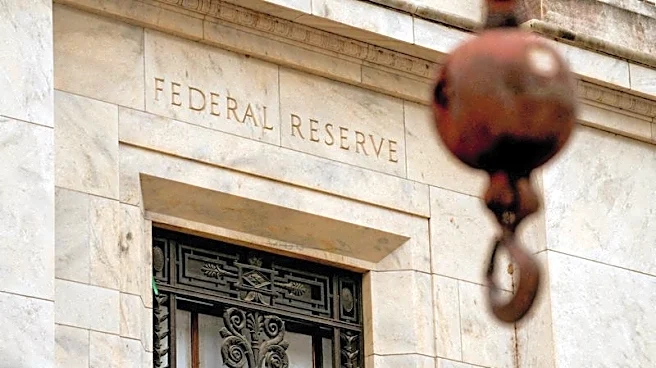
Federal Reserve Bank of Chicago President Austan Goolsbee stated that the boom in Artificial Intelligence (AI) data center construction is contributing to "borderline disturbingly high" inflation in the U.S. Goolsbee highlighted that the massive business
investment in the AI sector is indirectly driving up service prices. He noted that the current evidence does not suggest the U.S. is on track to return to the Federal Reserve's annual 2% inflation target. Consumer prices in October rose faster than economists anticipated, increasing by 0.4%, with both energy prices and other goods and services contributing to the rise. Goolsbee's remarks follow the Fed's October minutes, which indicated that most officials expect an interest rate hike in December.
Why It's Important?
Goolsbee's comments underscore a significant economic challenge: the potential for rapid technological advancement, specifically in AI, to exacerbate inflationary pressures. The substantial investment in AI infrastructure, while indicative of innovation and growth, is creating demand that outstrips supply in certain sectors, leading to higher costs. This situation complicates the Federal Reserve's efforts to manage inflation and achieve its 2% target. For the average American, this means continued erosion of purchasing power, as consumer sentiment remains low due to persistently high prices. The disconnect between the AI boom's wealth creation, exemplified by events like Anthropic's IPO, and the broader public's economic experience highlights a growing disparity, where many are feeling the pinch of inflation without directly benefiting from the tech sector's growth.
What's Next?
The Federal Reserve's upcoming decisions on interest rates will be heavily influenced by inflation trends and the broader economic impact of the AI boom. Goolsbee, who will join the Federal Open Market Committee in January, indicated that the Fed's actions will depend on whether inflation shows a clear path back to the 2% target. This suggests a continued hawkish stance from the central bank, potentially leading to further interest rate hikes to cool down the economy. Businesses involved in AI infrastructure, such as data center construction, may face increased scrutiny regarding their contribution to inflationary pressures. Consumers should anticipate that the fight against inflation will remain a top priority for economic policymakers, potentially affecting borrowing costs and overall economic growth.
Beyond the Headlines
The AI boom's contribution to inflation reveals a complex interplay between technological progress and macroeconomic stability. This situation raises questions about how to foster innovation without inadvertently destabilizing the economy. It also highlights the challenge of ensuring that the benefits of technological advancements are broadly distributed across society, rather than concentrated among a few. The current scenario could prompt discussions on policy tools beyond monetary policy, such as supply-side reforms or targeted investments, to address the root causes of inflation driven by specific industry booms. Furthermore, the 'disturbingly high' inflation could lead to a re-evaluation of the long-term economic models that underpin technological growth, emphasizing the need for sustainable development that balances innovation with economic equity and stability.