




What's Happening?
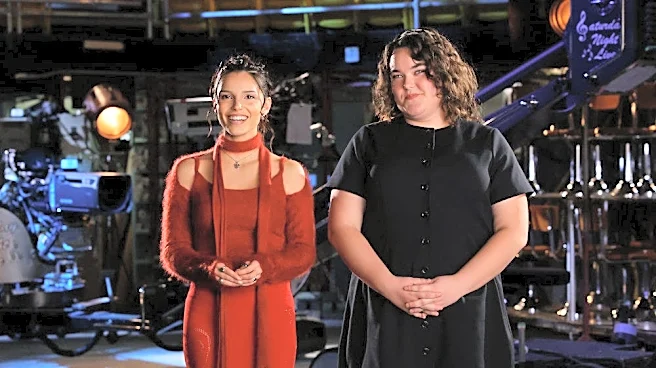
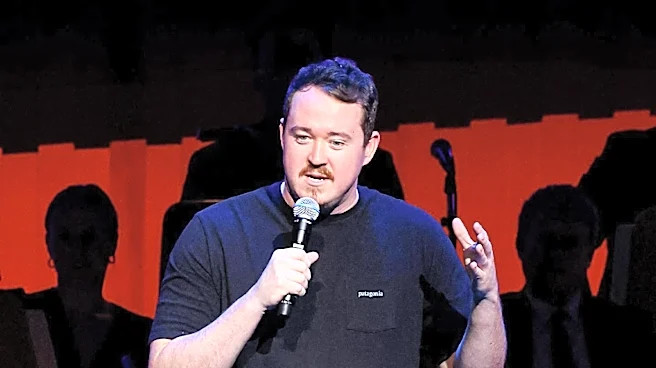
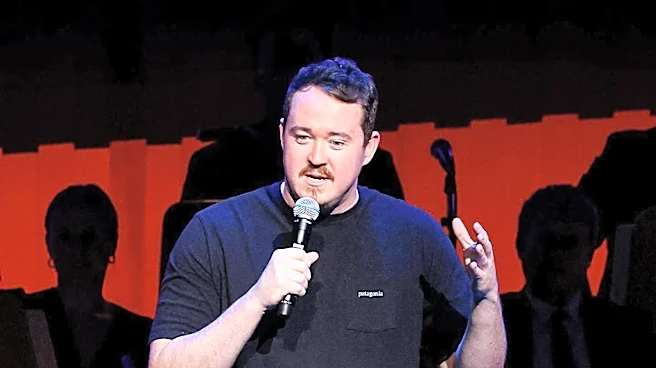
Actress Inde Navarrette, during her 'Saturday Night Live' monologue, subtly criticized comedian Shane Gillis's previous comments on women's workout attire. Gillis, who hosted an earlier episode in October, had made remarks lamenting women's gym wear,
describing it in a derogatory manner. Navarrette, making her 'SNL' debut, referenced her upcoming Marvel movie role and the need to get fit, then stated, 'So, every morning I put on my little whore outfit and I hit the gym,' directly echoing and subverting Gillis's controversial statement. Her response highlighted the backlash Gillis received, including criticism from actor Dan Levy.
Why It's Important?
Navarrette's monologue is significant as it directly addresses and challenges misogynistic commentary within a prominent national platform like 'Saturday Night Live.' This event underscores the ongoing public discourse surrounding sexism, body shaming, and the objectification of women in media and society. It highlights the power of public figures to use their platforms to either perpetuate or push back against harmful stereotypes. The incident also reflects a broader cultural sensitivity to such remarks, demonstrating that audiences and fellow entertainers are increasingly holding comedians and public figures accountable for their language and its impact.
What's Next?
The immediate 'SNL' appearance by Navarrette served as a direct, on-air response to Gillis's controversial monologue. While Gillis has not publicly addressed the backlash or Navarrette's comments, the incident is likely to fuel continued discussions about appropriate humor, freedom of speech, and accountability in comedy. This event could influence how 'SNL' and other entertainment platforms vet hosts and manage content, potentially leading to more cautious approaches to controversial topics or a greater emphasis on diverse perspectives in comedic performances. It also sets a precedent for how public figures might use their platforms to challenge problematic narratives.
Beyond the Headlines
This exchange on 'Saturday Night Live' reflects deeper societal tensions regarding gender roles, public perception of women's bodies, and the boundaries of humor. It brings to light the double standards often applied to women's appearance and the casual misogyny that can be normalized in public discourse. The incident also touches upon the evolving nature of comedy, where traditional shock humor is increasingly scrutinized for its social impact. It prompts a re-evaluation of what constitutes acceptable comedic material and the responsibility of comedians to consider the implications of their jokes on marginalized groups.