






What's Happening?
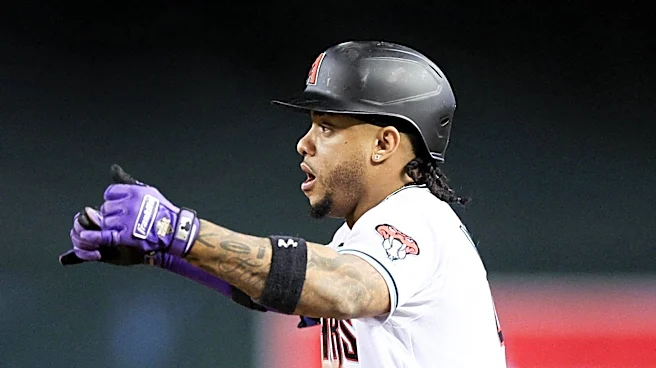
Ken Kendrick, the managing general partner of the Arizona Diamondbacks, anticipates a decrease in the team's budget for 2027. This follows a record-high payroll in 2026, which exceeded $200 million. The team is currently exploring significant roster changes,
including potentially trading second baseman Ketel Marte. Marte's performance in 2026 saw a decline in key metrics, making him a candidate for trade as the Diamondbacks seek to reorganize finances and acquire young talent. The team finished the 2026 season with an 86-76 record, missing the postseason, and identified needs for more left-handed power in the lineup and improvements to the pitching staff. General Manager Mike Hazen has acknowledged that some previous roster decisions did not yield desired results and is looking for a better combination to return to the playoffs, with payroll reduction being a part of this strategy.
Why It's Important?
This anticipated payroll reduction by the Arizona Diamondbacks signals a strategic shift within the organization, moving away from high spending towards financial reorganization and talent acquisition. For U.S. professional sports, particularly MLB, such moves can influence player markets, trade dynamics, and team competitiveness. A trade involving a high-salary player like Ketel Marte could free up significant financial resources, allowing the Diamondbacks to invest in other areas or reduce overall expenditures. This approach could impact the team's ability to attract top-tier free agents in the short term but might foster long-term sustainability by developing younger, more cost-effective talent. Other MLB teams might observe this strategy as a potential model for managing finances while aiming for competitive success, especially in an environment where payrolls are constantly under scrutiny. The decision reflects a broader trend in sports where financial prudence often balances with the pursuit of on-field success.
What's Next?
The Arizona Diamondbacks are expected to actively pursue a trade for Ketel Marte during the offseason. Potential trade partners, such as the Toronto Blue Jays, have previously shown interest in Marte, with the Diamondbacks reportedly seeking controllable starting pitchers in return. Any trade involving Marte would likely involve significant salary commitments for the acquiring team, potentially up to $87.5 million if his 2031 option is exercised. The Diamondbacks' focus will be on acquiring players who can address their identified needs for left-handed power and pitching improvements, while also reorganizing their financial structure. The team's management, including General Manager Mike Hazen, will be making decisions aimed at returning to the playoffs, with the 2027 budget reduction playing a key role in these strategic moves. The outcome of these decisions will shape the Diamondbacks' roster and competitive outlook for the upcoming seasons.
Beyond the Headlines
The Diamondbacks' decision to reduce payroll after a record-high spending year highlights the cyclical nature of financial strategies in professional sports. While high payrolls are often associated with competitive aspirations, their failure to deliver postseason success, as seen in 2026, can trigger a re-evaluation. This move could set a precedent for other mid-market MLB teams facing similar challenges, emphasizing the importance of balancing financial health with on-field performance. The ethical implications of trading a veteran player like Marte, who has had a significant impact on the team, for financial reasons and future talent, also come into play. It underscores the business aspect of sports, where player loyalty and fan expectations are often weighed against economic realities and long-term organizational goals. This shift could also influence player contract negotiations across the league, as teams become more cautious about long-term, high-value commitments.