







What's Happening?
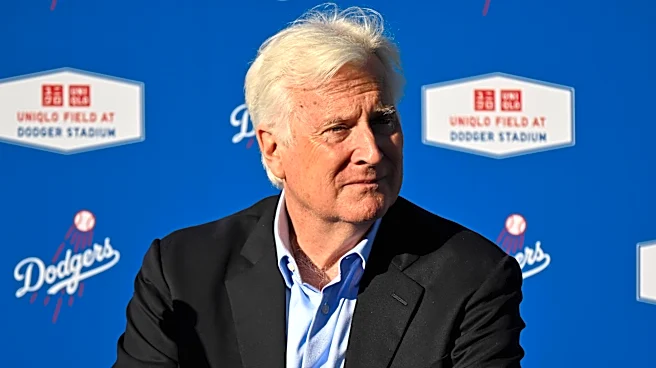
Insurers controlled by Los Angeles Dodgers owner Mark Walter are facing increasing funding pressure as billions of dollars in short-term loans extended to affiliated businesses are set to mature. A federal investigation is scrutinizing approximately $20
billion of insurance investments within Walter-controlled companies. The probe aims to determine how these insurers financed other businesses connected to Walter and whether any fraudulent activities occurred. As a result of this investigation, the insurers have reclassified over a third of their assets as being connected to their owner. Last year, nearly all of the $5.2 billion in short-term loans made by Walter's insurers were directed to affiliated businesses, with the majority scheduled to mature by the end of August. TWG Global and its insurance arm have stated their intention to significantly reduce most affiliated investments by the close of 2026. This concentration of short-term investments in affiliated entities is considered unusual within the insurance industry, which typically favors longer-term bonds and mortgages to align with long-term liabilities. For instance, Delaware Life had 8.6% of its investments in short-term loans by the end of 2025, and Clear Spring held almost 14%, significantly higher than the industry average of 0.6% in 2024. Many of these loans were made to limited-liability companies with minimal public information, carrying annual interest rates ranging from 6% to 12%.
Why It's Important?
This situation is important because it highlights potential vulnerabilities within the financial structures of large, interconnected business empires, particularly those involving insurance companies. The unusual concentration of short-term loans to affiliated businesses raises questions about risk management and transparency in the insurance sector. Insurance companies are typically expected to maintain conservative investment portfolios to ensure they can meet their long-term obligations to policyholders. A high proportion of short-term, high-interest loans to related parties could expose these insurers to liquidity risks if those affiliated businesses face financial difficulties or if the loans are not repaid on time. The federal investigation into potential fraud underscores the serious regulatory and legal implications, which could lead to significant penalties and a loss of public trust. Furthermore, the scrutiny on Mark Walter's financial practices could have broader implications for the sports ownership landscape, as he is a prominent figure with stakes in major sports franchises like the Los Angeles Dodgers and previously the Los Angeles Lakers. The financial health and regulatory compliance of such influential owners can impact the stability and public perception of the sports organizations they control.
What's Next?
The immediate future will likely see continued scrutiny from federal authorities as the investigation into Walter's insurers and their affiliate loans progresses. With a significant portion of these short-term loans maturing by the end of August, the insurers could face immediate funding challenges if the affiliated businesses are unable to repay them. TWG Global and its insurance arm have publicly committed to reducing most affiliated investments by the end of 2026, indicating a strategic shift to address regulatory concerns and mitigate financial risks. This process will involve divesting from or restructuring these affiliated holdings, which could impact the financial operations of both the insurers and the related businesses. Regulatory bodies are expected to maintain a close watch on these developments, potentially leading to new or reinforced regulations concerning related-party transactions and investment concentrations within the insurance industry. The outcome of the federal probe could also influence the future ownership and financial stability of Walter's sports assets, including the Los Angeles Dodgers, despite TWG's assertion that the Dodgers are not for sale. The broader financial market may also react to the findings of the investigation, particularly regarding the valuation and risk assessment of companies with similar complex financial structures.
Beyond the Headlines
Beyond the immediate financial and legal implications, this situation brings to light deeper issues concerning corporate governance, transparency, and the ethical responsibilities of financial institutions, especially those managing public funds through insurance policies. The practice of insurers lending heavily to affiliated entities, particularly with limited public information and high-interest rates, raises questions about potential conflicts of interest and the protection of policyholder assets. This case could serve as a catalyst for a broader re-evaluation of regulatory frameworks governing inter-company lending and investment practices within the insurance industry, potentially leading to stricter oversight to prevent similar situations. The involvement of a high-profile sports owner also intertwines the worlds of finance and professional sports, highlighting how financial controversies can spill over and affect public perception of beloved sports franchises. It underscores the importance of due diligence and ethical conduct not just in traditional financial sectors but also in the broader ecosystem of business ownership, where complex financial arrangements can have far-reaching consequences for various stakeholders, from policyholders to sports fans.