






What's Happening?
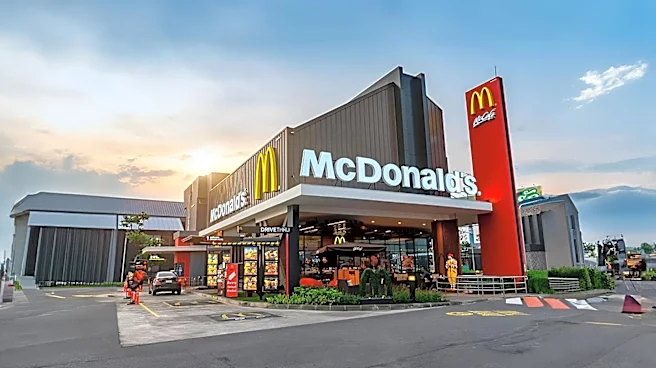
Cargill, the largest private company in the U.S., is the primary supplier of eggs to McDonald's, delivering nearly 2 billion eggs to the fast-food chain's American restaurants in 2023. This long-standing partnership involves a vast network of farms, processors,
and distributors. Cargill, despite its immense size and $154 billion in fiscal year 2026 revenue, remains under the ownership of the Cargill-MacMillan family, with over 100 family members holding the majority of the business. A significant development in their collaboration occurred in 2015 when McDonald's committed to sourcing only cage-free eggs for all its U.S. locations. This initiative necessitated a complete transformation for many of Cargill's egg-supplying farmers, who successfully transitioned to cage-free housing by 2023, supported by hundreds of millions of dollars in financing from Cargill.
Why It's Important?
This partnership highlights the significant influence of large, privately-owned agricultural corporations like Cargill on the U.S. food supply chain and consumer choices. McDonald's decision to transition to cage-free eggs, facilitated by Cargill, demonstrates how major fast-food chains can drive substantial changes in agricultural practices across the nation. This shift impacts animal welfare standards, requiring extensive investment and adaptation from egg producers. For consumers, it means a greater availability of cage-free egg products in a widely accessible format. The financial commitment from Cargill to assist farmers in this transition also underscores the economic power and strategic importance of such companies in shaping industry trends and meeting evolving consumer demands for ethically sourced products. This also showcases the resilience and adaptability of the agricultural sector when faced with new market requirements.
What's Next?
The successful transition to cage-free eggs by 2023 suggests a continued focus on sustainable and ethically sourced ingredients within the fast-food industry. Other major food service providers may follow McDonald's lead, further accelerating the shift towards cage-free egg production across the U.S. This could lead to increased demand for cage-free farming methods and potentially influence policy discussions around animal welfare in agriculture. Cargill's ongoing role will likely involve maintaining and optimizing this extensive supply chain, potentially exploring further advancements in sustainable farming or other ingredient sourcing. The long-term impact could include a broader normalization of cage-free eggs in the American diet and continued innovation in agricultural practices to meet both consumer preferences and corporate sustainability goals.
Beyond the Headlines
The story of Cargill and McDonald's extends beyond mere supply and demand, touching upon the ethical considerations of food production and the power of corporate responsibility. McDonald's commitment to cage-free eggs, while a business decision, reflects a growing societal concern for animal welfare. This move by a major player like McDonald's can set a precedent for other companies, influencing not just the egg industry but potentially other agricultural sectors as well. It also highlights the complex interplay between large corporations, their suppliers, and consumer advocacy groups in shaping industry standards. The financial investment by Cargill to support farmers in this transition demonstrates a model of corporate partnership that can drive significant, albeit costly, changes in agricultural practices, ultimately impacting the lives of animals and the choices available to consumers.