








What's Happening?
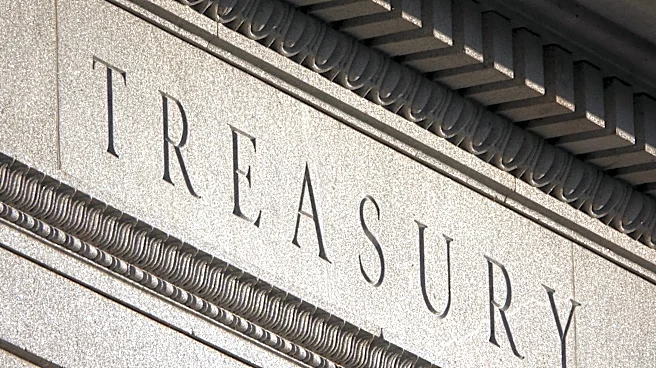
The U.S. Treasury Department has announced its intention to keep the sizes of its note and bond auctions unchanged for the next several quarters. This decision follows the Democrats sweeping the U.S. midterm elections, which analysts suggest may lead
to a more restrained future for Treasury borrowing and help prevent significant deficit increases. The Treasury's quarterly refunding statement, released on Wednesday, was largely perceived as neutral by market participants. Specifically, the size of the 30-year bond auction will remain at US$25 billion, consistent with the May and August quarterly refunding rounds. This stability in auction sizes indicates a measured approach to managing the nation's debt and financing needs in the current political and economic climate.
Why It's Important?
This decision by the U.S. Treasury is significant for several reasons. Firstly, maintaining stable auction sizes provides predictability for investors in the U.S. bond market, which is crucial for financial stability. It signals that the Treasury anticipates consistent borrowing needs without immediate plans for substantial increases or decreases in long-term debt issuance. Secondly, the context of a divided government post-midterms suggests a potential for fiscal conservatism, which could influence future borrowing strategies. While analysts believe this might help control deficit growth, it doesn't necessarily guarantee a reduction in elevated bond yields. The stability in bond issuance could also impact interest rates, affecting everything from mortgage rates to corporate borrowing costs, and thus influencing broader economic activity in the U.S.
What's Next?
The U.S. Treasury's commitment to maintaining current note and bond auction sizes for the foreseeable future suggests a period of stability in government debt issuance. Market participants will closely monitor subsequent quarterly refunding statements for any shifts in this strategy, particularly as economic conditions evolve and new legislative priorities emerge from the divided government. The impact of this stability on bond yields will be a key area of focus, as sustained high yields could continue to put pressure on federal borrowing costs and potentially influence the Federal Reserve's monetary policy decisions. Any unexpected changes in the U.S. borrowing outlook could trigger significant reactions in global financial markets, given the central role of U.S. Treasuries as a safe-haven asset.
Beyond the Headlines
The Treasury's decision reflects a delicate balance between financing the government's operations and managing market expectations in a politically divided landscape. Beyond the immediate financial implications, this stability in borrowing could subtly influence the dynamics between the legislative and executive branches regarding fiscal policy. A more restrained borrowing environment, as suggested by analysts, might encourage greater scrutiny of federal spending and potentially lead to more disciplined budgetary practices. This could have long-term implications for the U.S. national debt trajectory and the country's overall economic resilience, fostering a more predictable fiscal environment for both domestic and international investors.