







What's Happening?
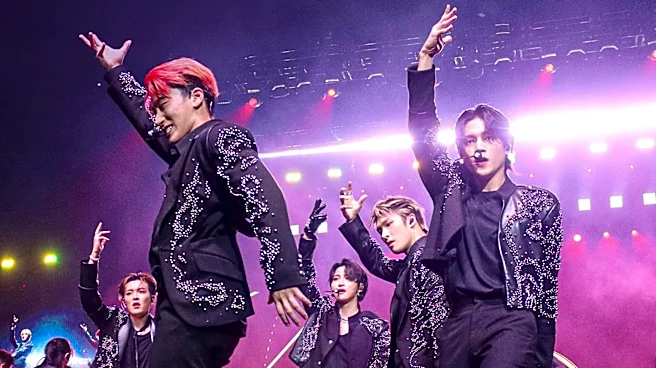
Foreign artists, particularly those from K-Pop and Latin music genres, are increasingly achieving significant success and chart dominance in the United States. Artists like BTS and Bad Bunny have reached major milestones, including speaking at the UN
General Assembly and headlining major festivals like Coachella and the Super Bowl halftime show. K-Pop's influence on the American market is attributed to its unique cultural blend with Western music styles and effective social media marketing strategies. Similarly, Latin artists like Bad Bunny have garnered immense popularity, with his albums achieving record-breaking streaming numbers and winning GRAMMYs. This trend signifies a growing appreciation for non-English music and diverse cultural expressions within the U.S. music landscape.
Why It's Important?
The rising dominance of foreign artists in the U.S. music charts is important because it reflects a significant cultural shift in American popular music consumption. It indicates a broadening of audience tastes beyond traditional English-language music and a greater openness to global sounds and cultures. This trend challenges the historical hegemony of Western music in the U.S. market, fostering a more diverse and inclusive musical environment. For the music industry, it opens new avenues for talent discovery, marketing strategies, and cross-cultural collaborations. It also highlights the power of social media in breaking down geographical barriers, allowing artists from around the world to connect directly with American audiences and build substantial fan bases.
What's Next?
This trend is likely to continue, with more foreign artists gaining traction and mainstream recognition in the U.S. music market. We can expect increased collaborations between American and international artists, leading to innovative genre fusions. Music labels and streaming platforms will likely invest more in promoting non-English language content to cater to evolving audience preferences. The success of artists like BTS and Bad Bunny also sets a precedent for future international acts, encouraging them to target the U.S. market. This could lead to a more globally interconnected music industry, where cultural exchange and diversity are increasingly valued and celebrated.
Beyond the Headlines
The growing popularity of foreign artists in the U.S. has deeper implications beyond music sales and chart positions. It signifies a broader cultural phenomenon where music acts as a bridge between different societies, fostering understanding and appreciation for diverse traditions. The success of artists who sing in languages other than English, such as Korean or Spanish, challenges linguistic barriers and encourages listeners to engage with unfamiliar cultures. This can contribute to a more globalized cultural identity in the U.S., where influences from various parts of the world are seamlessly integrated into daily life. Moreover, the ability of these artists to address social and political issues relevant to their cultures, as seen with Bad Bunny's performance, can introduce new perspectives and dialogues into the American public discourse.