





What's Happening?
Ethereum, the second-largest cryptocurrency by market capitalization, has experienced substantial volatility, including a sharp downturn in early 2026. Its value fell by $12.94 from the previous day and approximately $1,250 compared to the same time last
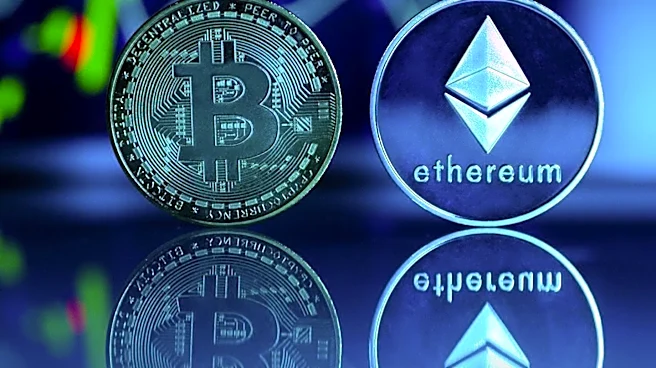
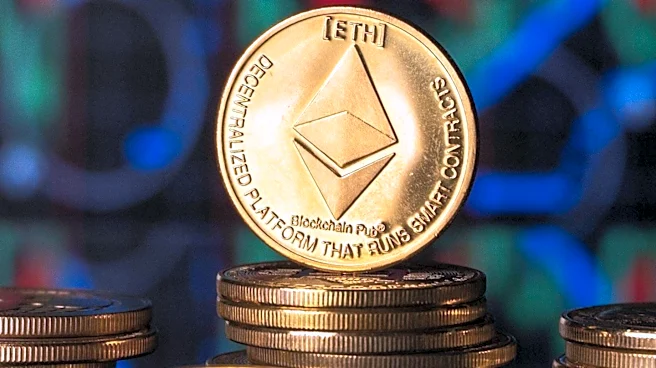
year, reaching $1,703.26. This decline follows a peak of nearly $5,000 in August 2025. The downturn in early 2026 was attributed to multiple factors, including broader concerns about a recession and the sale of millions of dollars worth of ETH by Ethereum co-founder Vitalik Buterin. Despite these fluctuations, Ethereum has shown significant long-term growth, surging over 60,000% since its initial coin offering (ICO) in 2014. Unlike Bitcoin, which primarily serves as a store of value, Ethereum functions as a decentralized computing platform, enabling users to develop and operate applications without traditional financial intermediaries.
Why It's Important?
The volatility of Ethereum, highlighted by its recent downturn and Vitalik Buterin's ETH sales, underscores the inherent risks and speculative nature of the cryptocurrency market. For U.S. investors, this emphasizes the importance of understanding market dynamics beyond traditional financial assets. The dual role of Ethereum as both a digital currency and a decentralized computing platform offers unique growth potential, attracting a large developer community and fostering innovation in decentralized finance (DeFi). However, this also means its value is influenced by network activity and adoption, in addition to broader economic health and regulatory changes. The significant price swings can lead to substantial gains for some investors but also considerable losses for others, making it a high-risk, high-reward asset. The ongoing evolution of the crypto space, including competition from other blockchains like Solana and Avalanche, further shapes Ethereum's long-term value and its impact on the broader digital economy.
What's Next?
The future trajectory of Ethereum will likely be influenced by several factors, including investor speculation, network activity, overall economic health, and regulatory developments. Experts are bullish on Ethereum's long-term potential, with some predicting it could reach $40,000 by the next decade, potentially surpassing Bitcoin. More conservative estimates place it closer to $10,000. The continued innovation within its decentralized computing platform and the growth of its developer community will be crucial for sustained demand. However, investors should anticipate continued volatility, as the cryptocurrency market remains sensitive to trader sentiment and hype. Regulatory clarity in the U.S. and globally could also significantly impact investor confidence and adoption. The competition from other blockchain projects will necessitate Ethereum's ongoing adaptation and innovation to maintain its market position.
Beyond the Headlines
The fluctuations in Ethereum's value and the actions of its co-founder, Vitalik Buterin, highlight deeper ethical and systemic considerations within the cryptocurrency ecosystem. Buterin's sale of ETH, while a personal financial decision, can trigger market reactions due to his prominent role, raising questions about insider influence and market manipulation in a decentralized environment. The concept of 'staking' in Ethereum, where users lock up ETH to validate transactions and earn rewards, represents a shift towards more energy-efficient consensus mechanisms compared to Bitcoin's 'proof of work.' This move has environmental implications and could influence regulatory perspectives on cryptocurrency sustainability. The broader adoption of Ethereum as a platform for decentralized applications (dApps) and DeFi challenges traditional financial structures, potentially leading to long-term shifts in how financial services are delivered and regulated, prompting ongoing debates about consumer protection, financial stability, and technological governance.