






What's Happening?
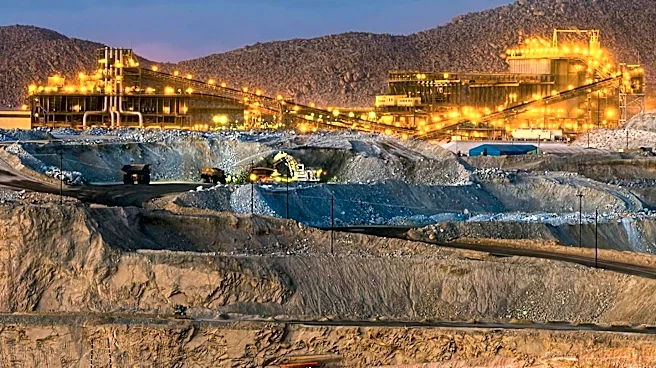
Rio Tinto has begun a progressive restart of underground operations at the Oyu Tolgoi copper-gold mine in Mongolia following a seismic event on October 29 that resulted in injuries to three employees. According to reports from October 30, safety reviews
were conducted prior to the restart, and the company confirmed that the event caused no structural damage to the underground cave or operating infrastructure. As of November 1, two of the injured employees were still receiving medical treatment. The current restart is described as progressive, meaning it does not yet signify a full return to normal production levels. Details regarding the percentage of underground capacity restored, the quantity of copper production deferred, or a definitive timetable for unrestricted operations have not been publicly disclosed. The focus for Rio Tinto is on safely restoring the production sequence without an extended interruption to ore delivery.
Why It's Important?
The Oyu Tolgoi mine is a significant global source of copper and gold, and its operational status has implications for the global supply chain of these critical minerals. Any disruption, even temporary, can influence commodity markets, potentially affecting prices and the availability of raw materials for various industries. For Rio Tinto, ensuring a safe and efficient restart is crucial for maintaining its production targets and financial performance. The incident also highlights the inherent risks associated with large-scale underground mining operations, particularly block-cave mining, which relies on controlled extraction and is sensitive to geotechnical considerations like seismic activity. The company's ability to quickly and safely resume operations will be closely watched by investors and the broader mining industry as a case study in incident response and operational resilience.
What's Next?
The immediate next steps for Rio Tinto involve continuing the progressive restart and ensuring the safety of all personnel and operational systems. Future updates are expected to clarify the extent of underground activity that has resumed and whether any restrictions remain in specific areas. Key indicators will include access permissions, the availability of ore-handling systems, and the sustained return of underground feed to the processing system. The company will need to provide clarity on three distinct measures: tonnes mined, copper produced, and concentrate shipped, as these may not recover simultaneously. Any subsequent guidance statements will be scrutinized for both volume and timing, as a shortfall recovered by year-end has different implications than production pushed into the following year. The long-term impact on unit costs and overall production guidance will depend on the duration and extent of the interruption.
Beyond the Headlines
This incident at Oyu Tolgoi underscores the complex interplay between geological stability, operational safety, and economic output in modern mining. While the reported lack of structural damage is positive, the injuries to employees highlight the persistent human element of risk in mining. The event also brings into focus the broader industry challenge of managing seismic activity in underground mines, particularly in block-cave operations where controlled fracturing of ore is fundamental. The incident serves as a reminder that even with advanced technology and safety protocols, unforeseen geological events can disrupt operations and pose risks to workers. The recovery process will likely involve detailed geotechnical assessments and potentially adjustments to operational procedures to mitigate future risks, contributing to evolving best practices in mine safety and risk management within the global mining sector.