






What's Happening?
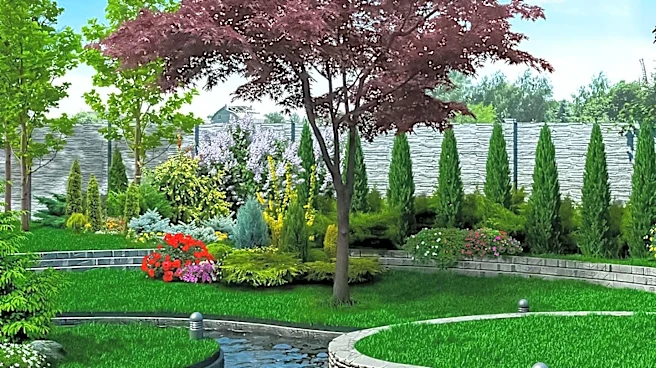
Garden professionals are recommending living screens, composed of plants, as a superior alternative to traditional fences for creating privacy in small backyards. According to garden designer Linda Vater, while fences offer advantages like a narrow footprint
and pet containment, they lack the natural beauty and ecological benefits of plants. Living fences can support pollinators, provide cut blooms, and integrate more harmoniously with the landscape's design. Experts suggest using evergreen shrubs that grow tall and narrow, such as arborvitae, to achieve screening without sacrificing valuable yard space. Native plant specialist Mary Phillips emphasizes that choosing native shrubs and trees not only simplifies care but also transforms privacy plantings into wildlife habitats, offering year-round structural interest, flowers, berries, seeds, and nesting sites. This approach also leads to a hardier hedge, as reliance on a single species makes landscapes more vulnerable to pests, diseases, and environmental stress.
Why It's Important?
This shift in privacy landscaping recommendations holds significant importance for homeowners, urban planning, and local ecosystems across the U.S. By promoting living screens, the advice encourages more sustainable and environmentally friendly practices in residential areas. The emphasis on native plants can boost local biodiversity by providing essential habitats and food sources for pollinators and other wildlife, which are crucial for ecological balance. For homeowners, this approach offers aesthetic benefits, transforming a simple barrier into a dynamic, living feature that enhances property value and personal well-being. Economically, it could stimulate demand for specific plant nurseries specializing in native species and landscape design services focused on ecological principles. Furthermore, reducing reliance on non-living fence materials could lessen the environmental impact associated with their production and disposal, contributing to broader sustainability goals in urban and suburban development.
What's Next?
Homeowners considering privacy solutions for their backyards are encouraged to consult resources like the National Wildlife Federation's Native Plant Finder to identify suitable species for their specific ZIP code. Before planting, individuals should assess their site's sun exposure, soil conditions, and drainage to ensure the chosen plants thrive. Garden designer Linda Vater advises spacing shrubs at 60% to 80% of their mature width to allow for dense growth without overcrowding, which can lead to disease. Regular, light pruning of established screens, focusing on encouraging branching rather than just shearing the outer surface, is recommended by plant expert Elin Harryson to maintain density. For quicker coverage, fast-growing plants like ligustrum or vines such as moonflower and passionflower can be utilized, though many vines are not evergreen. The integration of containers and hanging baskets is also suggested for very small yards to vary plant height and block sightlines effectively.
Beyond the Headlines
The movement towards living screens for privacy extends beyond mere aesthetics, touching upon deeper cultural and environmental values. It represents a growing recognition of the interconnectedness between human living spaces and the natural world, fostering a more harmonious coexistence. This approach challenges the traditional view of property boundaries as purely utilitarian barriers, instead promoting them as opportunities for ecological enrichment. Ethically, it encourages a stewardship mindset, where homeowners become active participants in supporting local ecosystems rather than simply consuming space. Long-term, widespread adoption of living screens could contribute to urban greening initiatives, mitigate the urban heat island effect, and improve air quality in residential areas. It also highlights a shift in consumer preferences towards sustainable living, potentially influencing architectural and landscape design trends to prioritize ecological integration and biodiversity in future developments.