

What's Happening?
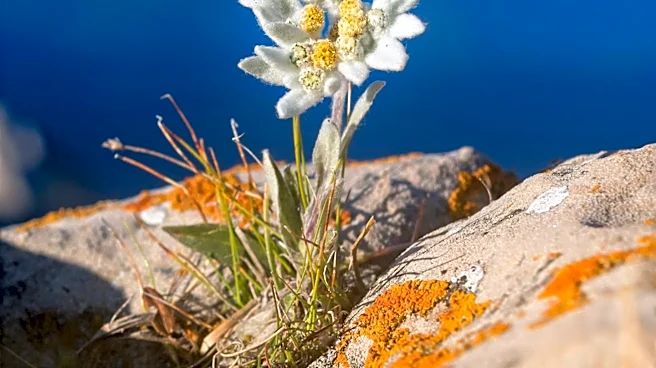
The edelweiss flower, known for its storied past and cultural significance, is being highlighted as a unique addition to rock gardens. Originating from the Alps, this flower requires specific growing conditions such as alkaline rocky or sandy soil, low fertility,
full sunlight, and cold winters. These conditions can be replicated in horticultural zones 4-7 in the U.S., making it possible for gardeners to cultivate this plant. The flower, which can survive temperatures as low as minus 20 degrees Fahrenheit, thrives in nutrient-poor soil and requires minimal watering after its first year. The edelweiss has been popularized by the song from the 1965 movie 'The Sound of Music', further cementing its place in popular culture.
Why It's Important?
The introduction of edelweiss into American rock gardens represents a cultural and horticultural exchange, bringing a piece of Alpine heritage to the U.S. This flower not only adds aesthetic value but also offers gardeners a chance to grow a plant with historical and cultural significance. Its ability to thrive in specific conditions highlights the importance of understanding and replicating native environments for successful cultivation. This can encourage gardeners to explore and appreciate diverse plant species, promoting biodiversity and cultural appreciation in gardening practices.