






What's Happening?
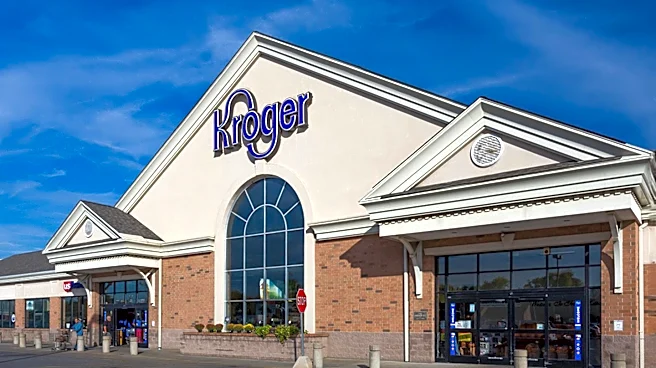
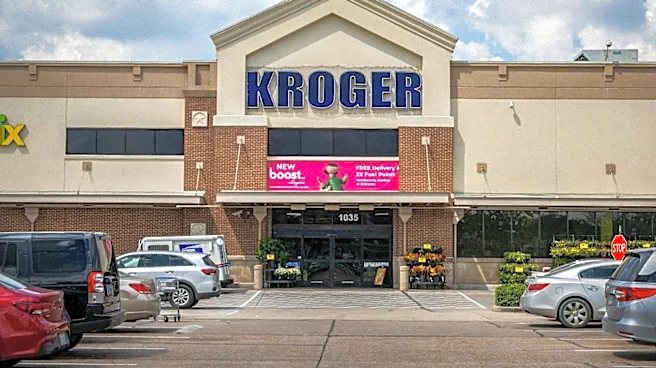
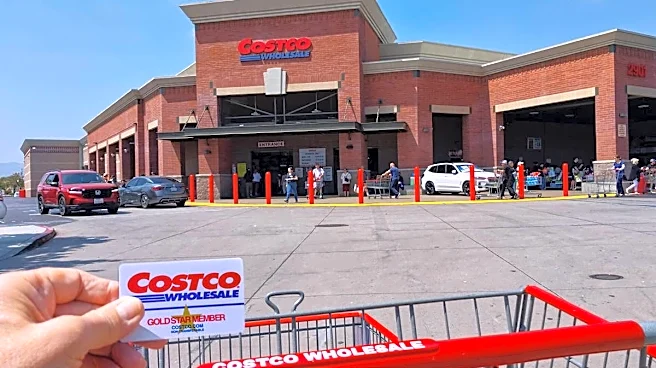
Kroger CEO Gregory Foran has stated that the company cannot compete on price with discount retailers like Walmart, Aldi, and Costco, acknowledging that Kroger does not have the lowest costs. Instead, Foran emphasized Kroger's strategy to provide the "best
value" to its customers. This sentiment was echoed by Albertsons CEO Susan Morris, who also indicated that their goal is not to be the cheapest but to offer a balanced value proposition tailored to their specific markets. This admission comes as studies, including one by Consumer Reports, and live price comparisons by TheStreet, consistently show traditional grocery chains like Kroger and Albertsons being more expensive than their discount counterparts. The focus on 'value' rather than 'lowest price' suggests a differentiation strategy that emphasizes quality, selection, service, or convenience to attract and retain customers.
Why It's Important?
This strategic positioning by Kroger and Albertsons has significant implications for the U.S. grocery market and consumer behavior. By explicitly stating they cannot compete on price, these major chains are signaling a shift in their competitive strategy, moving away from direct price wars with discount retailers. This could lead to a greater emphasis on customer loyalty programs, unique product offerings, enhanced in-store experiences, and convenience services to justify their higher price points. For consumers, this means a clearer distinction between grocery shopping options: those prioritizing the absolute lowest price will likely continue to favor discount stores, while those valuing other aspects like variety, quality, or service may stick with traditional supermarkets. This also highlights the intense pressure on profit margins within the grocery industry, forcing even large players to redefine their market niche and value proposition in a highly competitive environment. The success of this strategy will depend on their ability to effectively communicate and deliver on their 'best value' promise to consumers.
What's Next?
In response to their inability to compete solely on price, Kroger and Albertsons are likely to further refine their value propositions. This could involve increased investment in private-label brands, which often offer a balance of quality and affordability, or enhancing their fresh produce and specialty food selections to appeal to customers willing to pay more for premium items. We might also see an expansion of services such as online ordering, home delivery, and in-store pickup options, which add convenience and value for busy consumers. Marketing efforts will likely focus on highlighting the overall shopping experience, product quality, and community involvement rather than just price. The performance of these strategies will be crucial in maintaining market share against the continued growth of discount grocers and big-box retailers. Additionally, the ongoing consolidation in the grocery sector, such as potential mergers or acquisitions, could also be influenced by these competitive pressures, as companies seek economies of scale or unique market positions.
Beyond the Headlines
The acknowledgment by Kroger and Albertsons regarding their pricing strategy reflects a deeper structural challenge within the U.S. retail food industry. The rise of discount chains and the increasing price sensitivity of consumers have fundamentally altered the competitive landscape. This situation forces traditional supermarkets to confront the economic realities of their operating models, which often include higher overheads due to larger store formats, broader product assortments, and more extensive service offerings. The shift from 'cheapest' to 'best value' also touches upon consumer psychology and the evolving definition of value, which for many now encompasses factors beyond just cost, such as convenience, ethical sourcing, and personalized experiences. This trend could lead to a more segmented grocery market, where different retailers cater to distinct consumer preferences, potentially fostering innovation in service delivery and product differentiation across the industry. It also raises questions about the long-term viability of traditional supermarket models if they cannot effectively articulate and deliver a compelling value proposition that justifies their price points.