


What's Happening?
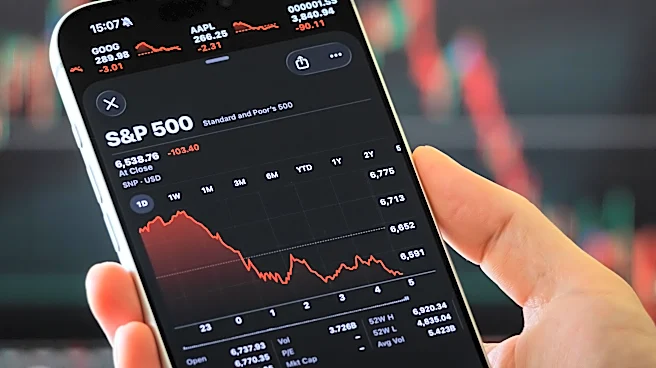
Goldman Sachs Group Inc.'s trading desk has indicated that the recent selloff in US stocks presents an attractive opportunity for acquisition. Despite this, the bank warns that overall investor positioning remains high, suggesting that the widespread
capitulation necessary for a significant market rally might not yet have occurred. The bank's Volatility Panic Index surged to 9.8 out of 10 on Friday, nearing historical peaks. Hedge funds have substantially reduced their exposure, with Goldman's prime brokerage data showing a third consecutive week of global equity selling. Short sales surpassed long purchases by a ratio of 1.5 to 1, and US single-stock shorting reached its highest weekly level since June 2022. Fundamental long-short funds have decreased their net leverage, a measure of risk appetite, to 42.3%, marking the lowest level in a year. While the equity unwind by hedge funds is considered 'quite extended,' suggesting a tactical entry point, significant headwinds persist, including elevated broader stock-market positioning and the Federal Reserve's anticipated continued interest rate hikes.
Why It's Important?
This assessment from Goldman Sachs is crucial for U.S. financial markets and investors, as it highlights a potential inflection point following a period of market volatility. The identification of a 'tactical entry' point could encourage some investors to re-enter the market, potentially stabilizing or even boosting stock prices. However, the accompanying warnings about elevated investor positioning and the Federal Reserve's actions underscore persistent risks. If broader investor positioning remains high, it could limit the upside potential of any rally, as there would be fewer new buyers to drive prices higher. The comparison to the fourth quarter of 2018, when the Fed's tightening cycle led to a significant market decline, serves as a cautionary tale, suggesting that the Fed's monetary policy could still exert downward pressure on equities. This situation creates a complex environment where investors must weigh potential gains against ongoing macroeconomic uncertainties, impacting investment strategies across various sectors.
What's Next?
The immediate future for US stocks will likely be influenced by how broader investor positioning evolves and the Federal Reserve's upcoming decisions on interest rates. If the Fed continues its tightening cycle as anticipated, it could mirror the 2018 scenario, potentially leading to further market declines before a bottom is reached. Investors will be closely monitoring economic indicators and Fed communications for any signs of a shift in policy. The elevated US Equity Sentiment Indicator, which tracks various positioning measures, suggests that a significant portion of the market has not yet capitulated, meaning there could be more selling pressure if market conditions worsen. Conversely, if the market interprets the current selloff as an overreaction and the Fed signals a more dovish stance, the 'tactical entry' point identified by Goldman Sachs could indeed lead to a meaningful rally. The actions of institutional investors, particularly mutual funds and exchange-traded funds, which have seen substantial inflows, will be critical in determining the market's direction.
Beyond the Headlines
The current market dynamics, as analyzed by Goldman Sachs, reveal a deeper tension between short-term trading opportunities and long-term structural risks. The divergence between hedge funds, which have aggressively reduced exposure, and broader investor positioning, which remains elevated, highlights a potential market segmentation. This could lead to increased volatility as different investor groups react to economic signals and Fed policy. The uncertainty surrounding future profits from artificial intelligence investments, mentioned as a headwind, points to a broader challenge in valuing growth stocks in a rising interest rate environment. This situation could also prompt a re-evaluation of risk management strategies across the financial industry, with a greater emphasis on understanding the interplay between monetary policy, investor sentiment, and technological advancements. The 'panic index' nearing historical extremes suggests a psychological component to market movements, where fear can drive irrational selling, potentially creating opportunities for those willing to take on calculated risks.