

What's Happening?
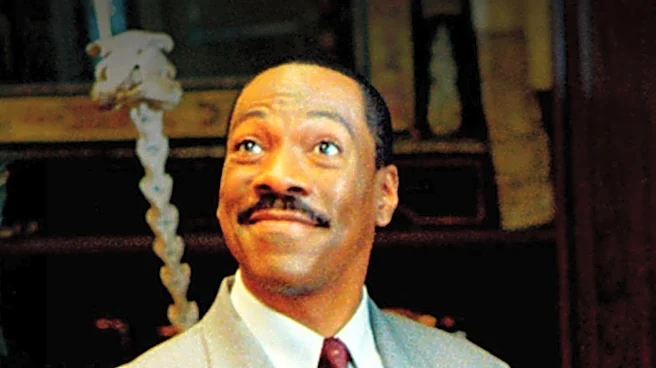
Eddie Murphy's 1989 film, 'Harlem Nights,' marked its 37th anniversary, highlighting its polarizing reception between critics and audiences. The movie, which Murphy wrote, directed, and starred in alongside Richard Pryor, depicts two wealthy criminals
navigating challenges from gangsters, corrupt police, and rival businessmen to maintain their illegal enterprise. Upon its release, critics largely panned the film, with the Washington Post calling it a 'vanity production' and Variety describing it as 'overdone, too rarely funny and, worst of all, boring.' Critics often cited Murphy's extensive involvement as a detriment, labeling it an 'excessive directorial debut.' Despite this critical backlash, 'Harlem Nights' has achieved unexpected popularity among fans, consistently appearing on lists of Eddie Murphy's best movies and significant Black films. Its Rotten Tomatoes score reflects this divide, with a 28% critic score versus an 80% audience score. The film is currently available on streaming platforms such as MGM+, Fubo TV, Starz, and YouTube TV.
Why It's Important?
The enduring legacy of 'Harlem Nights' underscores a significant divergence in how critical establishments and general audiences perceive cinematic value, particularly within the comedy genre and films by Black creators. This gap highlights the potential for films to resonate deeply with specific cultural or demographic groups, even when mainstream critics dismiss them. For the entertainment industry, this phenomenon suggests that critical acclaim is not always the sole determinant of a film's long-term cultural impact or commercial success. It also points to the evolving nature of film criticism and audience engagement, where fan communities and online ratings can significantly influence a movie's reputation over time. The film's continued presence on 'greatest Black movies' lists further emphasizes its importance in the canon of African American cinema, providing representation and storytelling that may have been overlooked by contemporary critics.
What's Next?
The continued availability of 'Harlem Nights' on major streaming platforms ensures its accessibility to new generations of viewers, potentially solidifying its cult status and further widening the gap between its critical and popular reception. As discussions around film canon and representation evolve, 'Harlem Nights' may continue to be re-evaluated, with scholars and critics potentially offering new perspectives that align more closely with its audience's appreciation. The film's anniversary could also spark renewed interest in Murphy's directorial efforts and his broader filmography, prompting retrospectives or analyses of his creative control during that period. For streaming services, the film's sustained popularity reinforces the value of diverse content libraries that cater to varied audience tastes, even for films that initially faced critical hurdles.
Beyond the Headlines
The critical-audience divide surrounding 'Harlem Nights' touches upon deeper issues of artistic autonomy, racial representation in media, and the subjective nature of art. Eddie Murphy's decision to write, direct, and star in the film was seen by some critics as an act of ego, yet for many fans, it represented a powerful assertion of creative control by a prominent Black artist. This dynamic raises questions about who gets to define artistic merit and whether traditional critical frameworks adequately assess films that break conventions or speak to specific cultural experiences. The film's enduring appeal suggests that it tapped into a cultural zeitgeist or provided a form of entertainment that resonated with its target audience in ways critics failed to grasp. This ongoing conversation about 'Harlem Nights' serves as a case study for understanding the complex interplay between artistic vision, critical reception, and audience legacy in Hollywood.