
What's Happening?
Chevron, a major American energy company, is significantly expanding its oil and gas exploration operations in the Eastern Mediterranean. This strategic shift is driven by soaring profits, heightened global
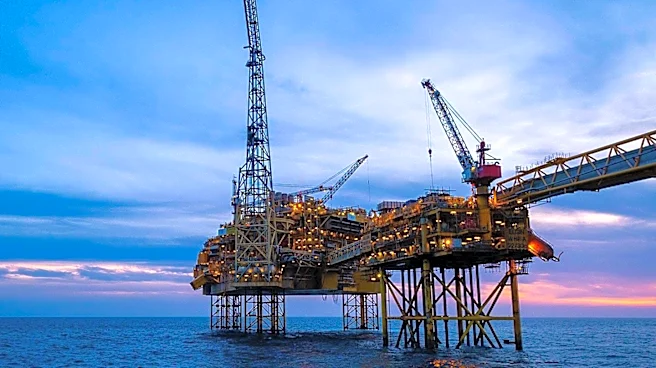
concerns over energy security, and a reassessment of hydrocarbon resources. The company is considering drilling for crude oil beneath Israel's Leviathan gas field, a technically challenging project where a previous attempt by its predecessor, Noble Energy, failed over a decade ago due to extreme geological pressure. Chevron currently operates Israel's Tamar and Leviathan gas fields and holds interests in the Aphrodite field off Cyprus and the Nargis discovery off Egypt. The company has also signed agreements for offshore exploration blocks in Greece and a memorandum of understanding for potential offshore exploration in Syria. This expansion has both commercial and geopolitical implications, particularly given Turkey's ambitions in the Eastern Mediterranean and the shelving of the proposed EastMed pipeline to Europe. Chevron's regional strategy now heavily relies on transporting gas from Israel and Cyprus to Egypt's liquefaction facilities for export.
Why It's Important?
Chevron's expanded presence in the Eastern Mediterranean carries significant implications for U.S. energy security and foreign policy. The move underscores a broader industry trend of renewed hydrocarbon exploration, influenced by global energy demands and geopolitical instability, such as the war with Iran. For the U.S., a stronger Chevron presence in the region can enhance diplomatic influence and provide a more diversified energy supply. For Israel, securing greater regulatory and tax certainty from its government is crucial to attract and retain such large-scale investments, which could unlock substantial crude oil reserves. The potential for new discoveries could bolster Israel's energy independence and export capabilities. However, the technical challenges and regulatory hurdles highlight the risks involved, with potential financial losses if drilling attempts fail or if government negotiations are prolonged. The shift also impacts European energy markets, as Chevron's strategy focuses on exporting gas via Egypt, potentially altering supply dynamics.
What's Next?
Chevron's next steps beneath the Leviathan field depend on several factors, including improved seismic data, securing necessary government approvals, and establishing an attractive tax framework from Israel's Finance and Energy ministries. The company needs to weigh the potential value of a discovery against the costs of another unsuccessful well and prolonged negotiations. The Leviathan partners have already approved a separate $68.8 million investment in seismic exploration using Ocean Bottom Nodes technology to better understand the reservoir and identify deeper geological prospects. While the current seismic survey has regulatory approval, drilling in deeper formations will require a separate permit. The Energy Ministry's fifth competitive licensing round for natural gas exploration has seen limited interest, indicating broader challenges in attracting international investment. Israel also faces the critical need to establish strategic onshore natural gas storage facilities and strengthen its energy infrastructure to mitigate vulnerabilities to disruptions.
Beyond the Headlines
The expansion of Chevron's operations in the Eastern Mediterranean highlights the complex interplay between commercial interests, energy security, and geopolitical dynamics. The region's hydrocarbon resources are not merely economic assets but also tools of diplomatic leverage and potential sources of conflict. The involvement of a major U.S. energy company like Chevron adds a layer of international interest and potential stability, but also introduces the risk of entanglement in regional disputes. The technical challenges of deepwater drilling, coupled with the need for regulatory certainty, underscore the high-stakes nature of these ventures. Furthermore, the broader context of global energy transition and climate change policies creates a tension between the immediate need for energy security and long-term sustainability goals. The success or failure of Chevron's gamble could set precedents for future international energy investments in politically sensitive areas.