





What's Happening?
Southern Copper Corporation (NYSE:SCCO), headquartered in Arizona with operations primarily in Mexico and Peru, has announced its highest quarterly sales and net earnings in company history for the period ending in September. This financial achievement
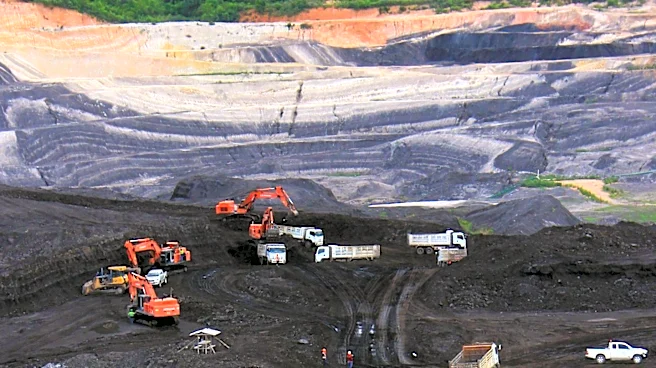
was primarily driven by increased metal prices rather than higher production volumes. The company's filing with the Securities and Exchange Commission detailed significant increases in net sales and net earnings attributable to the company. The average copper price on the London Metal Exchange was substantially higher than the previous year, with molybdenum and silver prices also climbing. Despite the sales jump, copper output experienced a slight decline, mainly from its Peruvian operations at Toquepala and Cuajone due to lower ore grades and recoveries, while Mexican output saw a modest increase. Southern Copper maintains one of the lowest reported cash costs in the industry, largely due to its significant by-product credits from molybdenum, silver, and zinc sales.
Why It's Important?
This record financial performance by Southern Copper highlights the significant impact of global commodity prices on the mining sector. The company's ability to achieve record sales and earnings despite a slight dip in production volume underscores the current strength in copper, molybdenum, and silver markets. This trend benefits shareholders and reinforces Southern Copper's financial stability, potentially enabling further investments in its projects. The company's low cash costs, bolstered by by-product sales, provide a competitive advantage, allowing it to remain profitable even during periods of price volatility. For the broader U.S. economy, as a U.S.-headquartered global major in copper production, Southern Copper's robust performance can signal confidence in the industrial metals sector, which is crucial for manufacturing, infrastructure, and technological advancements. The reliance on price rather than volume also indicates potential supply constraints or steady demand in the global market.
What's Next?
Southern Copper's Tia Maria project in Peru, a solvent-extraction and electrowinning facility, which was previously expected to begin operations in the final quarter of next year, has seen its projected start date shifted to the first half of the year after next. In Peru, other significant projects are in the pipeline, including Los Chancas, a large copper and molybdenum project slated for production around the beginning of the next decade, contingent on the removal of illegal miners. The Michiquillay deposit, a much larger undeveloped resource, also has a long-planned operational life. Additionally, an expansion at Cuajone is under evaluation, with a decision anticipated next year, likely aiming for increased daily throughput. Investors will be closely watching the January results call, where management is expected to provide detailed production and capital spending guidance for the upcoming year. The company also mentioned the potential for El Nino conditions to bring drought to southern Peru, though management currently foresees adequate water supply for its operations.
Beyond the Headlines
The delay in the Tia Maria project's operational start underscores the complex challenges faced by large-scale mining projects, including regulatory hurdles, community relations, and environmental considerations. Water management, particularly in regions prone to drought like southern Peru, remains a critical and sensitive issue, as mining operations often compete with agricultural needs for water resources. Southern Copper's proactive approach with seawater desalination for Tia Maria reflects an industry trend towards sustainable practices to mitigate environmental impact and secure social license to operate. The company's majority ownership by a parent entity means that trading volume in its public float is smaller, which can amplify daily stock movements around news events like earnings reports or dividend announcements. This ownership structure also necessitates adjustments when comparing Southern Copper to fully free-floating peers, highlighting unique market dynamics for such companies.