
What's Happening?
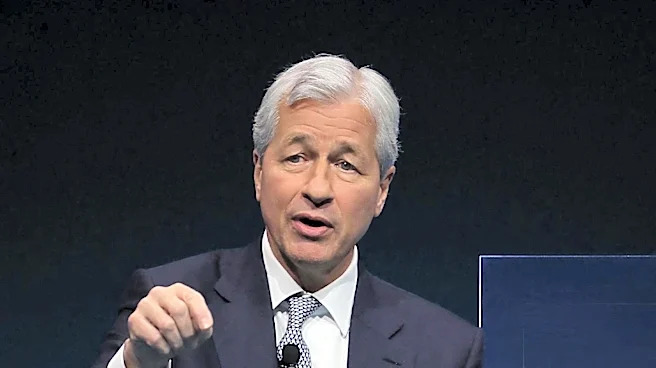
Jamie Dimon, the chief executive of JP Morgan, has publicly stated his intention to find ways to offset the recent increase in the UK bank surcharge. The tax, which applies to banks' UK balance sheets,
is set to rise from 3% to 6% in January as a temporary 15-month measure. Dimon, speaking at an event in London, characterized the increase as 'unfair' and indicated he would seek to claw back the additional costs. He emphasized that this move is intended to 'set an example' to governments regarding the trade-offs of such penalties. JP Morgan, the largest bank in the U.S., anticipates an additional £120 million in taxes due to this increase. The bank employs 23,000 people in the UK, including a significant presence in Bournemouth and plans for a new £3 billion tower in Canary Wharf, London.
Why It's Important?
This development is significant for U.S. financial institutions with substantial operations in the UK, as it highlights potential strategies to mitigate increased tax burdens. JP Morgan's stance could influence how other major U.S. banks with a UK presence respond to similar fiscal policies. The bank's decision to actively seek offsets could set a precedent, potentially leading to broader industry efforts to counter what they perceive as unfavorable tax environments. For U.S. economic stakeholders, this situation underscores the complexities and financial implications of international tax policies on global banking operations. The potential for reduced investment or altered operational strategies by a major U.S. bank in the UK could have ripple effects on transatlantic financial flows and market dynamics.
What's Next?
It remains unclear how JP Morgan plans to offset the increased tax costs, but Dimon's comments suggest a proactive approach. This could involve a range of strategies, from operational adjustments to re-evaluating investment plans in the UK. The bank has previously lobbied against tax increases and, in May, suggested that plans for its new London headquarters could be reconsidered. While sources familiar with the matter indicated in October that the building plans were still proceeding, Dimon's recent remarks suggest continued pressure on the UK government. Other financial institutions operating in the UK will likely monitor JP Morgan's actions closely, potentially influencing their own responses to the tax hike. The situation could also prompt further dialogue between the banking sector and the UK government regarding the long-term impact of such fiscal policies.
Beyond the Headlines
The dispute over the UK bank surcharge extends beyond immediate financial implications, touching upon broader themes of international tax competitiveness and the relationship between governments and the financial sector. Dimon's assertion of 'setting an example' suggests a strategic effort to influence future policy decisions, not just in the UK but potentially in other jurisdictions considering similar measures. This situation highlights the ongoing tension between national governments seeking to increase revenue from profitable sectors and multinational corporations striving to optimize their global tax liabilities. The ethical dimension arises from the perception of 'unfair penalties' by a highly profitable industry, contrasting with government justifications for using bank taxes to fund public services. This dynamic could lead to a re-evaluation of how financial services are taxed globally and the long-term implications for economic growth and investment.