





What's Happening?
Ultium Cells, a joint venture between General Motors Corp. and LG Energy Solution, is set to invest $1 billion in its Spring Hill, Tennessee, battery manufacturing plant. This investment, combined with the recently launched production of lithium iron
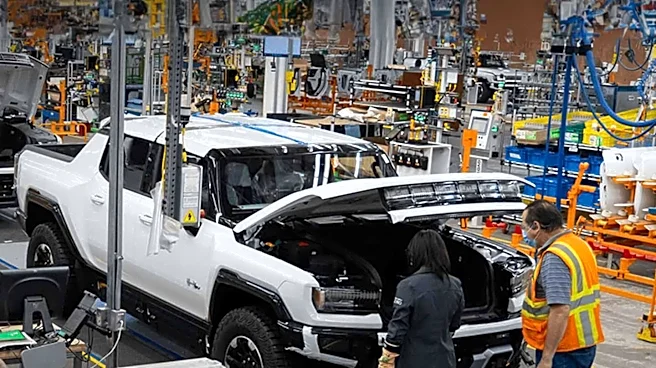
phosphate (LFP) batteries for energy storage, is projected to add 500 jobs to the facility's current workforce of approximately 1,200 by 2028. The expansion will enable the plant to produce lithium manganese rich (LMR) battery cells, marking it as potentially the first facility globally to mass-produce such cells. These LMR batteries are intended for use in GM electric vehicles, offering a higher energy density than LFP cells and aiming to significantly reduce production costs for GM's EV business. The Spring Hill plant, spanning 2.8 million square feet, is located adjacent to a GM assembly plant, facilitating integrated production processes.
Why It's Important?
This significant investment by Ultium Cells underscores a strategic shift in the U.S. electric vehicle (EV) battery manufacturing landscape. By focusing on LMR battery production, GM aims to improve the economic viability of its EV offerings, addressing previous challenges related to cost and performance. The introduction of LMR cells, which boast higher energy density and lower costs, is crucial for making EVs more accessible and competitive in the market. The creation of 500 new jobs in Tennessee also represents a boost to the local economy and the broader U.S. manufacturing sector, supporting the domestic supply chain for critical EV components. This move is part of a larger effort to localize battery production, reduce reliance on foreign imports, and enhance the resilience of the U.S. automotive industry's transition to electric vehicles.
What's Next?
The expansion project is expected to be completed by 2028, with the Spring Hill plant becoming a key hub for advanced battery production. GM anticipates that the integration of LMR batteries will lead to cost reductions of 'thousands of dollars per vehicle at the pack level,' which could translate into more competitively priced EVs for consumers. The success of this initiative could influence future investment decisions in battery technology and manufacturing across the U.S. automotive sector. Furthermore, the development of advanced battery chemistries like LMR is likely to continue, with a focus on improving energy density, charging speed, and overall performance, while simultaneously driving down production costs to accelerate EV adoption.
Beyond the Headlines
The investment in LMR battery technology highlights a broader trend in the EV industry towards innovation in battery chemistry to overcome current limitations. Beyond cost savings, the focus on higher energy density and improved performance is critical for extending EV range and enhancing consumer appeal. This development also touches upon the environmental implications of battery production, as advancements in chemistry can lead to more efficient use of raw materials and potentially less reliance on certain critical minerals. The establishment of advanced manufacturing capabilities in the U.S. contributes to national energy security and industrial competitiveness, fostering a robust domestic ecosystem for electric vehicle production and sustainable energy solutions.