






What's Happening?
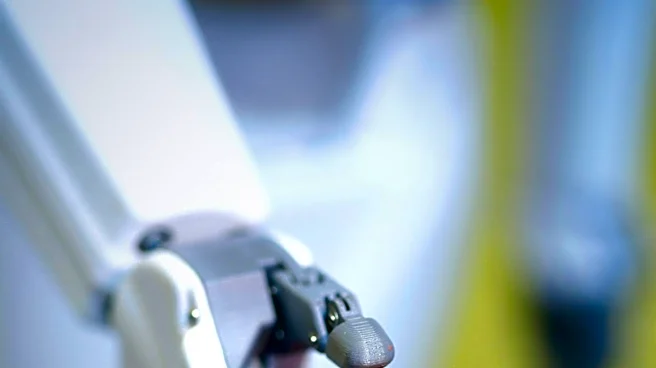
Zimmer Biomet Holdings, Inc. has introduced a new technology category called 'Surgeon-Guided Autonomy' at the Annual Meeting of the American Association of Hip and Knee Surgeons (AAHKS). This initiative aims to redefine intelligent orthopedic surgery
by focusing on systems that enhance a surgeon's capabilities rather than replacing them. The company's vision is to develop intelligent surgical systems that take on more cognitive and physical tasks, allowing surgeons to concentrate on critical decisions. This new framework, 'Predict. Perform. Recover.,' integrates surgical planning, execution, and post-operative recovery into a continuous loop. The 'Surgeon-Guided Autonomy' concept emphasizes that technology should understand and execute surgeon intent, keep the surgeon in command, and create a learning loop to inform future surgical plans based on patient recovery data. This approach is designed to transfer the burden of repetitive tasks to technology, thereby increasing surgeon autonomy.
Why It's Important?
This introduction by Zimmer Biomet signifies a significant shift in the medical technology landscape, particularly within orthopedic surgery. By focusing on 'Surgeon-Guided Autonomy,' the company is addressing a critical need to optimize surgical workflows and improve patient outcomes while maintaining the surgeon's central role. The 'Predict. Perform. Recover.' framework has the potential to streamline the entire surgical journey, from pre-operative planning to post-operative care, by leveraging data analytics and artificial intelligence. This could lead to more personalized and effective surgical plans, reduced surgical errors, and faster, more predictable patient recoveries. For healthcare providers, this technology could enhance efficiency and reduce the physical and cognitive strain on surgeons. Patients stand to benefit from more precise surgeries and improved long-term results. The emphasis on a learning loop also suggests continuous improvement in surgical techniques and outcomes over time, potentially setting new standards in orthopedic care.
What's Next?
Zimmer Biomet plans to further develop and integrate its existing technologies, such as ROSA® Knee with OptimiZe™, Persona® Knee System, ZBEdge® Analytics, and mymobility® Care Management Platform, within the 'Surgeon-Guided Autonomy' framework. The company will continue to engage with the surgical community to refine these intelligent systems. The awareness campaign, 'Surgeon-Guided AutonoMe,' will likely expand to educate both medical professionals and the public about the benefits of this new approach. Future developments will focus on creating a seamless connection between planning, surgery, and recovery, ensuring that insights from each patient's recovery inform subsequent surgical plans. This ongoing evolution is expected to lead to more advanced intelligent surgical systems that empower surgeons and improve patient care across the orthopedic spectrum.
Beyond the Headlines
The concept of 'Surgeon-Guided Autonomy' raises broader implications for the future of human-machine collaboration in high-stakes fields like medicine. It highlights a philosophical shift from viewing automation as a replacement for human expertise to seeing it as an augmentation tool. This approach could set a precedent for other medical specialties and industries where human judgment is paramount. Ethically, it emphasizes patient safety and surgeon control, mitigating concerns about fully autonomous systems in critical procedures. Legally, it may influence regulatory frameworks for medical devices, focusing on how technology supports human decision-making rather than operating independently. Culturally, it could reshape the perception of surgeons, portraying them as orchestrators of advanced technology rather than solely manual practitioners. This development underscores a long-term trend towards intelligent systems that enhance human capabilities, fostering a more symbiotic relationship between humans and AI in complex tasks.