
What's Happening?
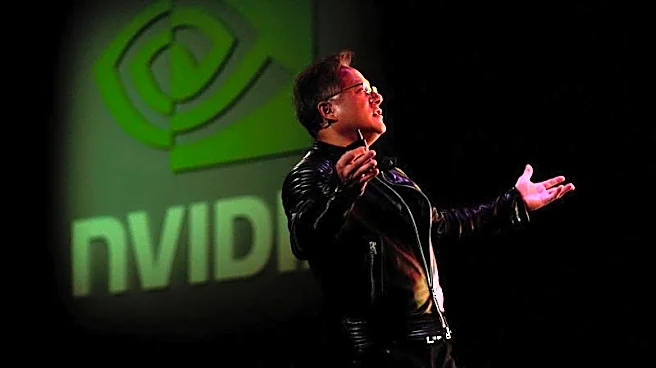
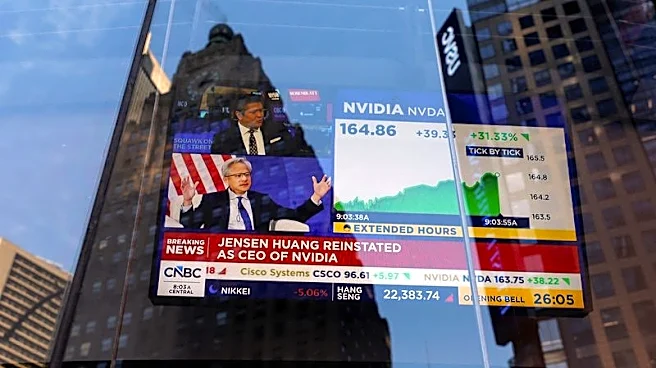
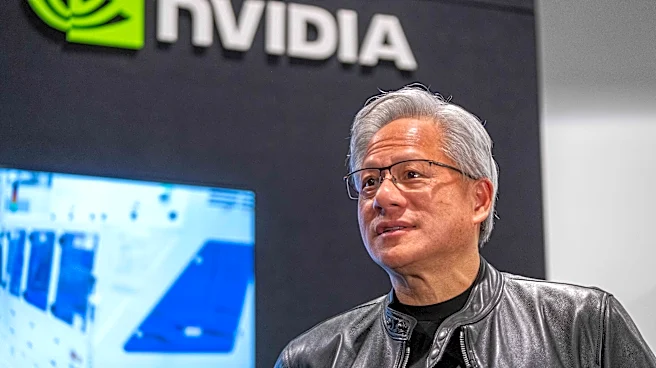
Prominent technology executives, founders, and Wall Street investors have expressed widespread celebration on social media following Nvidia's board decision to reinstate co-founder Jensen Huang as CEO.
This move concludes an 11-day leadership crisis that had caused significant unease within the AI sector. Elon Musk, CEO of Tesla and SpaceX, who had publicly advocated for Huang's return, posted "It is done" and "The mistake has been corrected" on X. OpenAI CEO Sam Altman simply reacted with "Jensen!", while Perplexity CEO Aravind Srinivas welcomed the news with "Welcome back @JensenHuang!". Other notable figures, including YouTube co-founder Steve Chen and Epic Games CEO Tim Sweeney, also voiced their approval, with Chen calling it a "huge win" for Nvidia and the AI industry. The board's decision to reinstate Huang as president and CEO was unanimous, following a public campaign urging his return after his departure on November 12.
Why It's Important?
The swift and decisive reaction from Silicon Valley leaders to Jensen Huang's reinstatement underscores his critical importance to Nvidia and the broader artificial intelligence industry. His temporary absence created significant instability, highlighting how central individual leadership can be to the perception and stability of major tech companies. For the U.S. technology sector, Huang's return signals a restoration of confidence in Nvidia, a key player in AI chip development, which is vital for continued innovation and growth in AI. The collective relief expressed by industry titans suggests that stability at the helm of companies like Nvidia is seen as crucial for maintaining momentum in the rapidly evolving AI landscape. This event also demonstrates the power of public and industry pressure in influencing corporate governance decisions, especially when a leader is perceived as indispensable to a company's success and the industry's future.
What's Next?
With Jensen Huang back at the helm, Nvidia is expected to regain stability and continue its strategic initiatives in the AI hardware and software sectors. The immediate future will likely see a renewed focus on product development and market expansion, particularly in areas critical to AI advancement. The unanimous board decision and widespread industry support could strengthen investor confidence in Nvidia, potentially leading to positive market reactions. This event might also prompt other tech companies to re-evaluate their succession planning and crisis management strategies, especially concerning highly influential founders or CEOs. The AI sector, which was rattled by the brief leadership vacuum, can now proceed with greater certainty regarding Nvidia's direction, potentially accelerating ongoing projects and collaborations across the industry.
Beyond the Headlines
The episode surrounding Jensen Huang's brief departure and subsequent return reveals deeper insights into the cult of personality within the tech industry and the perceived indispensability of certain leaders. It highlights how a single individual can be seen as synonymous with a company's vision and future, particularly in rapidly evolving fields like AI. This situation also brings to light the intricate balance between corporate governance and stakeholder influence, where public campaigns and industry sentiment can significantly sway board decisions. Ethically, it raises questions about the concentration of power and the potential risks associated with such reliance on a single leader. Culturally, it reinforces the narrative of the visionary founder as the ultimate driver of innovation, a common theme in Silicon Valley that continues to shape leadership expectations and corporate structures.