




What's Happening?
Anna Jane Wisniewski has shared her insights on several athleisure brands, focusing on their quality, durability, and the prevalence of synthetic fabrics. She highlights brands like Varley, Splits59, Beyond Yoga, and Spanx, commending them for their robust
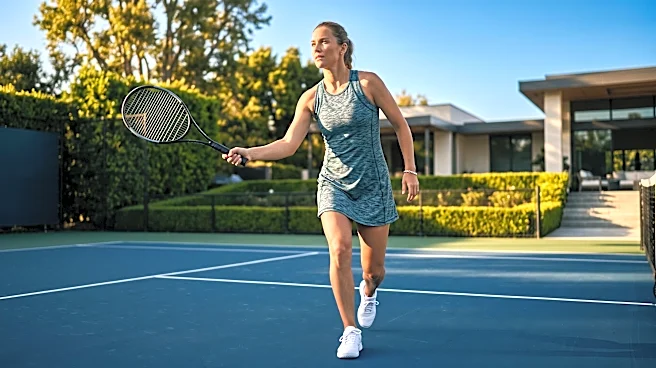
construction and longevity. Wisniewski notes that Varley athleisure is chic and high-quality with reinforced seams, while Splits59 leggings resist bunching and pilling. Beyond Yoga's spacedye fabric is praised for its resilience, with one tennis dress lasting over five years. Spanx is recognized for its solid lounge and tennis wear, despite Wisniewski's personal preference for 100% cotton in other apparel. Her discussion acknowledges a personal 'synthetic fabric hypocrisy,' as she aims to reduce synthetics but finds them necessary and well-performing in specific athleisure items.
Why It's Important?
This discussion is important for U.S. consumers and the apparel industry as it sheds light on the evolving landscape of athleisure wear. For consumers, Wisniewski's recommendations offer guidance on investing in durable, high-quality pieces that withstand wear and tear, potentially reducing the frequency of purchases and promoting more sustainable consumption habits. For athleisure brands, her insights underscore the market demand for products that combine style with longevity, even when made from synthetic materials. The emphasis on sales and avoiding full price also reflects consumer financial consciousness, influencing pricing strategies and promotional activities within the retail sector. This perspective can encourage brands to innovate in material science and manufacturing processes to meet consumer expectations for both performance and sustainability.
What's Next?
Consumers are likely to continue seeking out athleisure brands that offer a balance of style, comfort, and durability, potentially driving increased demand for the brands highlighted by Wisniewski. Retailers may respond by featuring these brands more prominently or by offering similar quality alternatives. The broader conversation around synthetic fabrics and sustainability in fashion is expected to continue, pushing brands to explore more eco-friendly production methods or transparently communicate the benefits of their synthetic materials. Black Friday and other sales events will remain crucial for consumers looking to purchase these higher-quality items at reduced prices, influencing brands' promotional calendars and inventory management. The ongoing dialogue may also encourage more brands to focus on the longevity of their products as a key selling point.
Beyond the Headlines
The discussion extends beyond mere product reviews, touching upon the ethical and environmental considerations of synthetic fabrics in the fashion industry. Wisniewski's 'synthetic fabric hypocrisy' reflects a common dilemma for consumers who value sustainability but find certain synthetic materials indispensable for performance wear. This highlights a broader societal shift towards conscious consumerism, where individuals grapple with personal values versus practical needs. The emphasis on durability also subtly challenges the fast fashion model, advocating for investment in fewer, higher-quality items that last longer. This could lead to a re-evaluation of material sourcing and manufacturing practices across the U.S. apparel sector, potentially fostering innovation in sustainable synthetics or blended fabrics that offer both performance and environmental responsibility. The conversation also underscores the power of personal endorsements and influencer opinions in shaping consumer choices in the highly competitive athleisure market.