



What's Happening?
Walmart is significantly expanding its Bettergoods private label brand with the introduction of three new flavored butter sticks. This launch follows a series of recent additions to the Bettergoods line, which has been actively introducing more diverse
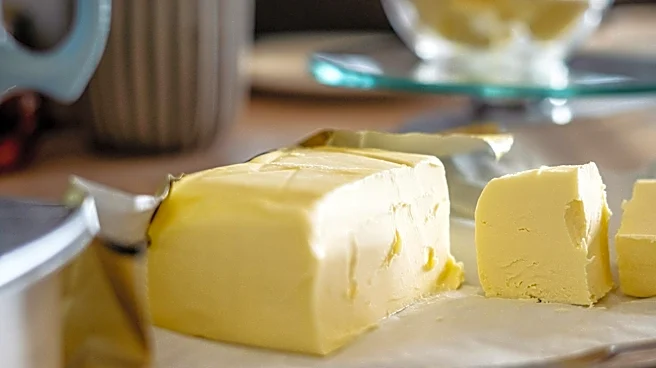
and interesting food options to customers. The new butter sticks include European Style Steakhouse Butter, infused with parsley, garlic, salt, and peppercorns; European Style Roasted Garlic Butter, a simple yet versatile option; and European Style Honey Cinnamon Butter, suitable for rolls, pancakes, or bagels. Each butter stick boasts 82% butterfat, exceeding the standard for American-style butter, which contributes to increased creaminess and flavor. While these new products have not yet appeared on Walmart's official website, they are expected to be available in stores soon. This expansion is part of a broader strategy by Walmart to enhance its private label offerings, which has previously included new frozen shrimp flavors, mac and cheese packs, and breakfast breads, all of which have been well-received by consumers.
Why It's Important?
This expansion of Walmart's Bettergoods line is important for several reasons, primarily impacting the U.S. retail and food industries. By introducing premium-quality, flavored butter sticks at an affordable price point, Walmart is directly competing with specialty food brands and potentially shifting consumer purchasing habits. The emphasis on 'European Style' and higher butterfat content suggests a move towards offering more gourmet-like options within a mass-market private label, making such products accessible to a wider demographic. This strategy could put pressure on national brands to innovate or adjust pricing to remain competitive. For consumers, it means more diverse and potentially higher-quality options in everyday grocery shopping, offering value without sacrificing flavor. The success of these new products could further solidify Walmart's position as a significant player in the private label market, influencing other retailers to invest more in their own store brands to capture a larger share of consumer spending. This trend also reflects a broader consumer demand for convenient, yet elevated, food experiences at home.
What's Next?
The immediate next step is the availability of these new butter sticks in Walmart stores across the U.S. Following their in-store launch, consumer reception will be a key indicator of their success. If these new butter sticks, like other recent Bettergoods additions, prove popular, Walmart is likely to continue its aggressive expansion of the private label line, potentially introducing more innovative and specialty food items. This could lead to further diversification within the Bettergoods brand, covering a wider array of culinary categories. Competitors in the grocery sector will likely monitor Walmart's strategy closely, potentially responding with their own enhanced private label offerings or marketing adjustments. The ongoing success of the Bettergoods line could also influence food manufacturers to explore partnerships with large retailers for private label development, or to focus more on product differentiation to stand out against growing store brand competition. Consumers can anticipate a continued evolution of grocery store shelves, with an increasing emphasis on quality and variety in private label products.
Beyond the Headlines
Beyond the immediate retail implications, Walmart's strategic investment in its Bettergoods line, particularly with products like flavored butter, reflects a deeper shift in consumer values and the grocery market. There's a growing demand for convenience coupled with an interest in elevated home cooking experiences, often inspired by social media and food culture. By offering accessible 'gourmet' ingredients, Walmart is democratizing culinary trends, allowing more households to experiment with sophisticated flavors without the premium price tag of specialty stores. This move also highlights the increasing power of private labels, which are no longer perceived as merely budget alternatives but as brands capable of innovation and quality. This trend could lead to a re-evaluation of brand loyalty, as consumers become more willing to choose store brands that offer comparable or superior quality at a better value. Furthermore, it underscores the importance of in-house product development for large retailers, enabling them to respond more agilely to market trends and consumer preferences, ultimately reshaping the competitive landscape of the U.S. food industry.