


What's Happening?
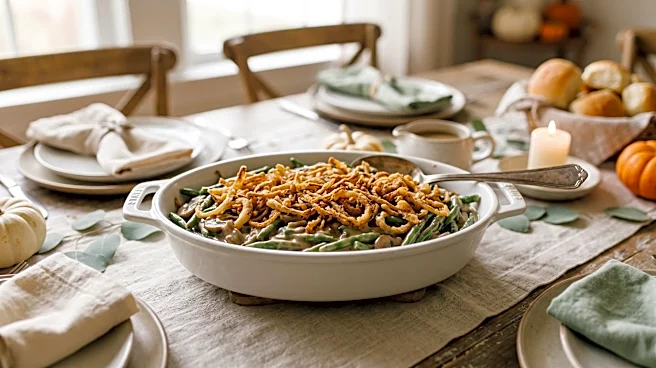
The classic green bean casserole, a dish developed by Dorcas Reilly of Campbell's test kitchen in 1955, continues to be a Thanksgiving holiday staple across the United States. The recipe, which combines canned green beans and condensed cream of mushroom
soup, gained widespread popularity after Campbell's printed it on its soup cans. According to Campbell's, nearly 40 million cans of cream of mushroom soup are sold during Thanksgiving month, accounting for approximately 30% of its annual sales for the soup. This volume is sufficient to create 40 million casseroles. A 2026 'State of the Sides' report by Campbell's indicates that 67% of respondents associate the dish with past Thanksgivings, and 51% feel the holiday table would be incomplete without it. The casserole is particularly popular in the Midwest, appearing on 60% of Thanksgiving tables in the region, with Nebraska and Missouri leading at 70% and 68% respectively.
Why It's Important?
The enduring popularity of Campbell's green bean casserole highlights the significant role of traditional, convenience-driven recipes in American holiday culture. The consistent high sales of cream of mushroom soup during Thanksgiving month demonstrate a powerful consumer loyalty to established brands and familiar comfort foods. This trend underscores the economic impact of seasonal demand on food manufacturers like Campbell's, where a single product can drive a substantial portion of annual sales during a specific period. The dish's cultural significance, as indicated by its strong association with Thanksgiving memories and its perceived necessity for a complete holiday meal, also reflects broader societal values placed on tradition and shared culinary experiences. For the food industry, this illustrates the long-term value of iconic recipes and the challenge for new products to achieve similar cultural penetration.
What's Next?
Given its deep-rooted cultural significance and consistent consumer demand, the green bean casserole is expected to remain a central feature of Thanksgiving celebrations for the foreseeable future. Campbell's will likely continue to leverage this tradition in its marketing strategies, particularly during the holiday season, to maintain its market share for cream of mushroom soup. While some home cooks may introduce variations, the core recipe's simplicity and familiarity are key to its enduring appeal, suggesting that significant changes to the dish are unlikely to gain widespread acceptance. The company's focus will probably remain on ensuring product availability and reinforcing the nostalgic connection consumers have with the casserole.
Beyond the Headlines
The green bean casserole's journey from a test kitchen creation to a national holiday icon offers insights into the evolution of American culinary practices, particularly the embrace of convenience foods in the mid-20th century. Its continued presence on Thanksgiving tables, despite evolving dietary preferences and a growing interest in fresh, from-scratch cooking, speaks to the powerful role of nostalgia and tradition in food choices. The dish also serves as a cultural touchstone, sparking discussions and even debates among home cooks about authenticity versus innovation. This phenomenon extends beyond the culinary realm, reflecting a broader societal tension between preserving heritage and adapting to modern trends, making the casserole a symbol of both continuity and subtle change in American life.