


What's Happening?
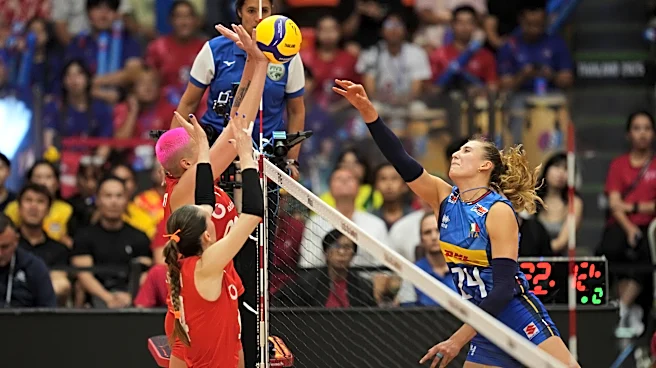
The International Volleyball Federation (FIVB) has announced Anaheim, Omaha, and Orlando as the initial U.S. host cities for the 2027 Women's Volleyball World Cup. This 32-team tournament is a significant event, as it also serves as a qualifying competition
for the Los Angeles 2028 Olympics. The announcement, made on September 17, details that venues in California, Nebraska, and Florida will host matches. Specifically, Omaha's CHI Health Center Arena and Orlando's Kia Center are slated to host pool play and Round of 16 matches. Anaheim's Honda Center will be the site for the tournament's most crucial stages, including the quarterfinals, semifinals, and the final. The Honda Center is also designated as the indoor volleyball venue for the 2028 Olympics. The tournament is scheduled to run from August 20 to September 5, 2027, with matches spread across the United States and Canada. The World Cup will award Olympic berths to the three highest-finishing teams that have not yet secured a spot in Los Angeles.
Why It's Important?
The selection of these U.S. cities as hosts for the 2027 Women's Volleyball World Cup carries significant implications for both the sport and the host communities. For volleyball, it elevates the sport's profile within the United States, a key market for global sports. Hosting a major international tournament like the World Cup, especially one that is an Olympic qualifier, provides an opportunity to showcase elite-level women's volleyball to a broader American audience, potentially inspiring new generations of athletes and fans. Economically, the event is expected to bring substantial benefits to Anaheim, Omaha, and Orlando through increased tourism, hospitality, and local spending. Businesses in these cities, including hotels, restaurants, and transportation services, stand to gain from the influx of teams, staff, and spectators. Furthermore, the tournament's role as an Olympic qualifier adds an extra layer of excitement and importance, directly impacting which nations will compete in the Los Angeles 2028 Olympics. This also provides a crucial test run for Anaheim's Honda Center, which will host the indoor volleyball events for the 2028 Olympics, allowing for logistical and operational fine-tuning.
What's Next?
Following the announcement of the first three U.S. host cities, the next steps will involve the FIVB and local organizing committees finalizing preparations for the 2027 Women's Volleyball World Cup. This includes the identification and announcement of Canadian host cities, which are still pending. Logistical planning for team accommodations, transportation, and training facilities will intensify in Anaheim, Omaha, and Orlando. Marketing and ticketing campaigns will likely commence closer to the event date to maximize attendance and engagement. From a competitive standpoint, national teams worldwide will begin their preparations, aiming to secure one of the coveted Olympic berths offered by the tournament. The performance of teams in the World Cup will be closely watched, as it will directly influence their qualification status for the Los Angeles 2028 Olympics. Additionally, the host cities will continue to develop their infrastructure and event management capabilities in anticipation of both the World Cup and the subsequent 2028 Olympic Games.
Beyond the Headlines
The decision to host the 2027 Women's Volleyball World Cup in the U.S., particularly with Anaheim's Honda Center serving as a dual venue for both the World Cup finals and the 2028 Olympics, highlights a strategic effort to integrate major international sporting events. This approach allows for continuity in event planning and infrastructure utilization, potentially setting a precedent for future multi-event hosting strategies. The focus on women's volleyball also underscores a broader trend in sports to promote and invest in women's athletic competitions, recognizing their growing audience and commercial potential. The tournament's role as an Olympic qualifier adds a layer of national pride and international competition, fostering diplomatic and cultural exchanges among participating nations. Furthermore, the event provides a platform for showcasing American cities on a global stage, potentially boosting their international profiles as sports tourism destinations. The long-term impact could include increased participation in volleyball at grassroots levels across the U.S., inspired by the visibility of elite athletes competing on home soil.