






What's Happening?
The Controlled Environment Agriculture (CEA) market is anticipated to grow significantly, reaching $282.44 billion by 2035, according to recent projections. This growth is driven by increasing demands for quality crops year-round, food security concerns,
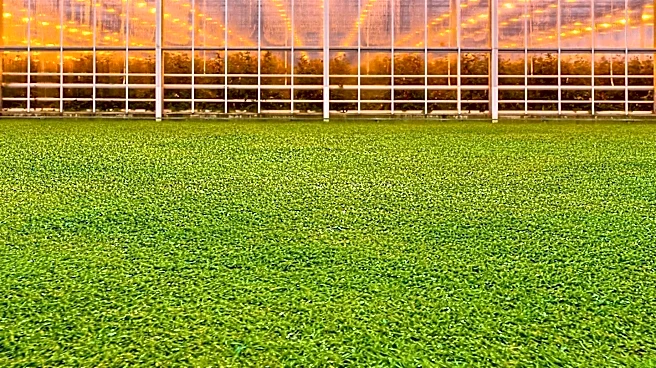
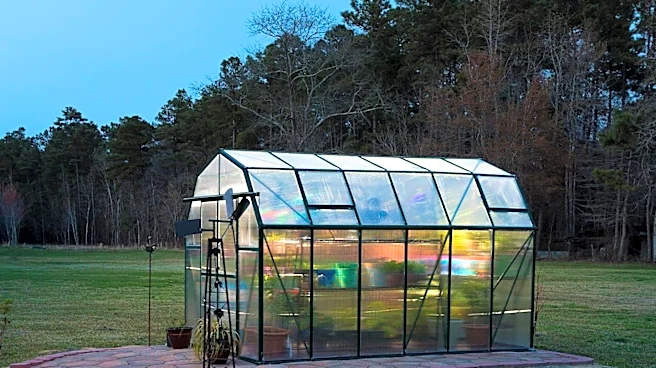
and sustainable agricultural practices. The market, valued at $82 billion in 2025, is expected to expand at a compound annual growth rate (CAGR) of 13.20%. Factors such as rapid urbanization, reduction in arable land, and unpredictable climatic conditions are pushing investments in greenhouse farming, vertical farming, hydroponics, and aeroponics. Technologies like automation, artificial intelligence, and IoT-based monitoring systems are being utilized to enhance crop yield while minimizing water and energy use.
Why It's Important?
The expansion of the CEA market is crucial for addressing global food security and sustainability challenges. As urbanization increases and arable land decreases, innovative farming techniques like CEA offer solutions to produce food efficiently and sustainably. The integration of advanced technologies such as AI and IoT in agriculture not only improves productivity but also reduces environmental impact by optimizing resource use. This market growth could lead to significant economic opportunities, particularly in North America, which currently dominates the market due to investments in vertical farming and smart agricultural technologies.
What's Next?
As the CEA market continues to grow, further advancements in technology and increased investment are expected. Stakeholders, including governments and private investors, may focus on developing infrastructure and policies to support sustainable agriculture. The adoption of AI and IoT in farming practices is likely to increase, enhancing efficiency and productivity. Additionally, as the market expands, there may be a shift towards more localized food production, reducing the carbon footprint associated with food transportation.