





What's Happening?
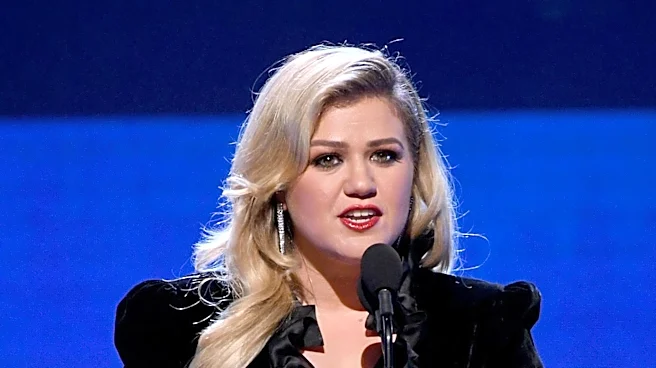
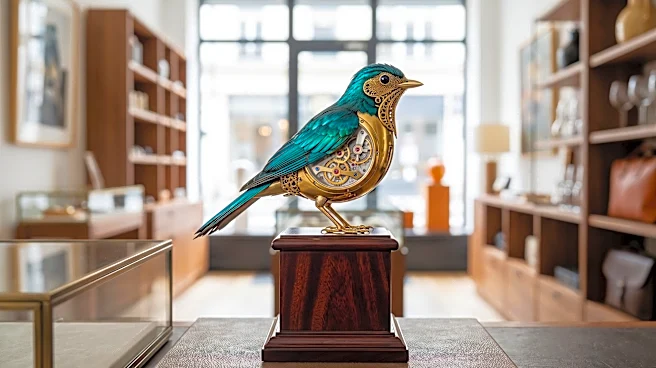
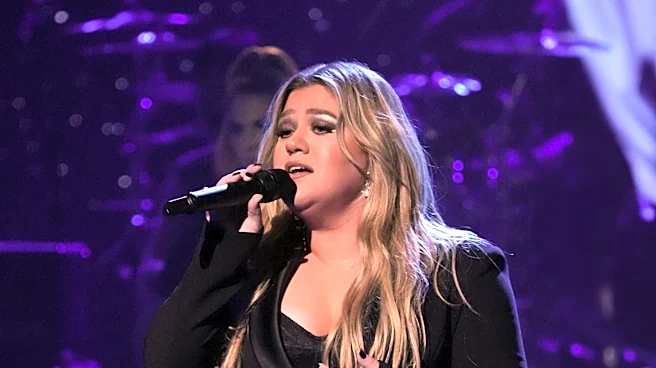
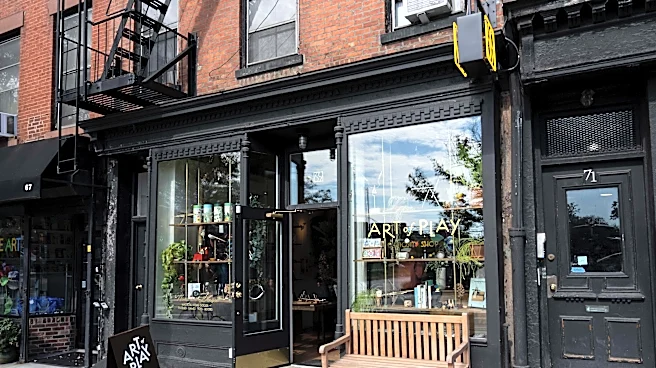
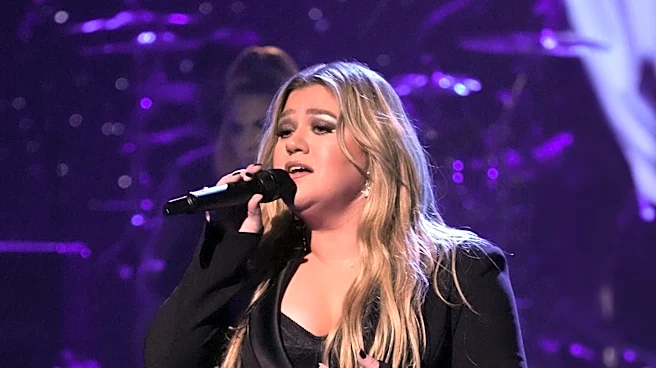
Grammy winner Kelly Clarkson has publicly claimed that a boutique store in Brooklyn, Art of Play, refused to sell her a singing and dancing mechanical bird that was displayed on their wall. Clarkson stated that she felt she was "looked at as if I couldn't
afford" the bird, which she said was priced at $15,000. The incident has sparked a social media storm. Art of Play has responded to Clarkson's allegations, defending their actions. The store clarified that the wooden bird in question is a permanent fixture, attached to the wall, and is not for sale. They further stated that during Clarkson's five-minute visit on Saturday, an employee did suggest to her that she could purchase an identical bird for the price of $15,000.
Why It's Important?
This incident, while seemingly minor, highlights several broader implications within the retail and celebrity culture landscape. For businesses, it underscores the critical importance of clear communication regarding product availability and pricing, especially when dealing with high-profile customers. Misunderstandings can quickly escalate into public relations challenges, amplified by social media. For consumers, particularly celebrities, it sheds light on the potential for perceived biases or misjudgments based on appearance or status. The rapid spread of the story on social media demonstrates the power of celebrity influence and the immediate impact of online narratives on a brand's reputation. It also touches on the value perception of unique or artistic items, where a store might prioritize a display piece over an immediate sale, leading to customer frustration. The incident serves as a case study in how quickly a personal interaction can become a public spectacle in the digital age.
What's Next?
The immediate aftermath of this incident will likely involve continued public discussion on social media platforms, with fans and critics weighing in on both Kelly Clarkson's account and Art of Play's defense. The store may face ongoing scrutiny regarding its customer service practices and product display policies. Depending on the public's reaction, Art of Play might issue further clarifications or statements to manage its brand image. For Kelly Clarkson, the incident may become a talking point in future interviews or public appearances, potentially reinforcing her narrative about the experience. This event could also prompt other businesses to review their policies on selling display items or interacting with celebrity clientele to avoid similar misunderstandings. The story will likely fade as new news emerges, but it serves as a memorable example of a celebrity-consumer interaction gone awry.
Beyond the Headlines
Beyond the immediate dispute, this story touches on the subtle dynamics of consumer perception and the unspoken rules of retail. The idea of being "looked at as if I couldn't afford" something speaks to deeper societal biases and assumptions often made based on appearance or perceived status, even for a well-known figure like Kelly Clarkson. It raises questions about the psychological impact of such judgments on individuals and the broader implications for inclusive customer service. Furthermore, the store's decision to keep a unique item as a permanent display, even when offered a significant price, highlights the artistic and curatorial value that some businesses place on their inventory, transcending mere commercial transaction. This incident also subtly explores the tension between the commercial imperative to sell and the desire to maintain a certain aesthetic or artistic integrity within a retail space. It's a micro-example of how personal interactions can reveal larger cultural attitudes towards wealth, art, and service.