







What's Happening?
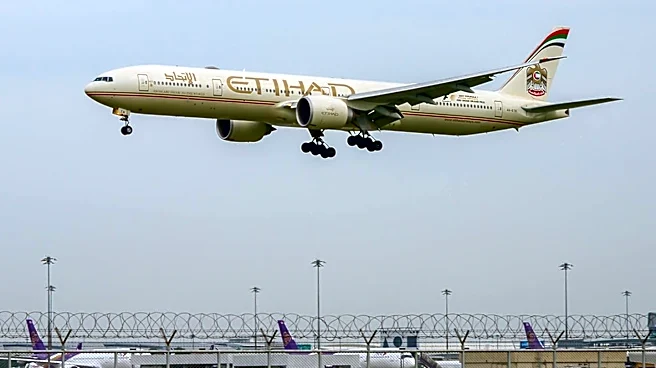
Etihad Airways has inaugurated a new daily non-stop service between Abu Dhabi and Tashkent, marking the airline's first direct route to Uzbekistan. This expansion is part of Etihad's strategy to enhance its international network, positioning Abu Dhabi as a key
international gateway. The new route offers travelers from Uzbekistan direct access to Abu Dhabi and, through Etihad's extensive network, connections to major global markets including the GCC, Europe, the Levant, and North America. The service is further supported by a codeshare partnership with Uzbekistan Airways, allowing passengers to connect to eight additional destinations within Uzbekistan. This development is expected to bolster tourism and business travel between the UAE and Central Asia, reflecting the growing travel demand between these regions.
Why It's Important?
The launch of the Abu Dhabi-Tashkent route is significant as it strengthens the UAE's connectivity with Central Asia, a region with increasing economic and tourism potential. For Uzbekistan, this direct link to Abu Dhabi opens up access to the UAE's vibrant economy and its global aviation network, potentially boosting tourism and business exchanges. For the UAE, the route enhances its role as a major transit hub, attracting more international travelers and fostering economic ties with Central Asia. This move aligns with Etihad's strategy to position Abu Dhabi as a premium international transit and destination hub, supporting the broader economic and tourism objectives of the UAE.
What's Next?
The new route is expected to facilitate increased movement of tourists and business travelers between Uzbekistan and the UAE. As travel demand continues to grow, Etihad may explore further expansion opportunities within Central Asia and beyond. The codeshare agreement with Uzbekistan Airways could also lead to additional partnerships, enhancing connectivity and offering more travel options for passengers. The success of this route could encourage other airlines to consider similar expansions, further integrating Central Asia into the global aviation network.