

What's Happening?
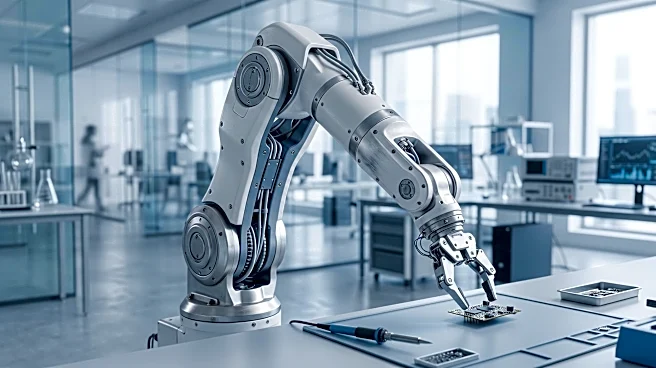
NVIDIA's Seattle Robotics Lab, in collaboration with the NVIDIA Isaac engineering team, has conducted research into automating the assembly of GB300 tester trays. This research focuses on the shift from purely position-controlled robotics to hybrid position- and
force-controlled operations in electronics manufacturing. The study utilized two Flexiv Rizon 4s adaptive robots alongside a traditional collaborative robot, coordinated by NVIDIA's Task and Agent Lifecycle Orchestration System (TALOS). The primary challenges addressed were busbar assembly and multi-connector insertion, both requiring high precision, dexterity, and controlled physical interaction. The research highlights the importance of force control in enabling robots to respond intelligently to physical contact, adapt to variations, and handle delicate components, which traditional position-controlled robots struggle with in real-world production environments due to factors like conveyor drift and workpiece misalignment.
Why It's Important?
This advancement in force-controlled robotics is crucial for the evolving demands of AI infrastructure build-out, where the manufacturing of complex hardware faces bottlenecks due to reliance on manual labor. Automating delicate assembly tasks with adaptive robots can significantly improve production efficiency and consistency. By reducing failed insertions and component damage, manufacturers can lower scrap rates and rework, leading to improved first-pass yield. The technology also enhances equipment utilization by minimizing interruptions and recovery operations. Furthermore, adaptive control reduces the need for extensive mechanical fixtures or trajectory adjustments, making deployment more efficient and production systems more flexible to accommodate evolving product designs and changing requirements. This frees experienced manufacturing personnel to focus on supervision, quality assurance, and optimization, rather than repetitive and physically demanding assembly tasks.
What's Next?
The research by NVIDIA suggests a future where robotic systems can maintain precision while adapting to real-world manufacturing variations. The integration of machine vision, motion planning, compliant control, and learning-based manipulation will likely become more prevalent in advanced manufacturing. The business case for force-controlled robotics will depend on specific applications, with manufacturers needing to evaluate ROI through metrics like reduced scrap rates, improved equipment utilization, and enhanced production flexibility. Continued development in this area could lead to more widespread adoption of adaptive robots in industries requiring delicate and precise assembly, potentially transforming electronics manufacturing and other sectors that currently rely heavily on manual dexterity.
Beyond the Headlines
The shift towards force-controlled robotics represents a significant leap in automation capabilities, moving beyond rigid, pre-programmed movements to more intelligent, adaptive interactions. This has broader implications for the nature of work, as repetitive tasks are increasingly automated, allowing human workers to transition to roles requiring higher-level cognitive skills such as process supervision, troubleshooting, and innovation. Ethically, this raises questions about workforce retraining and the societal impact of increased automation. Legally, it may necessitate new standards for robot-human collaboration and safety in manufacturing environments. Culturally, it signifies a growing reliance on advanced AI and robotics to meet complex industrial demands, pushing the boundaries of what machines can achieve in physical manipulation.