





What's Happening?
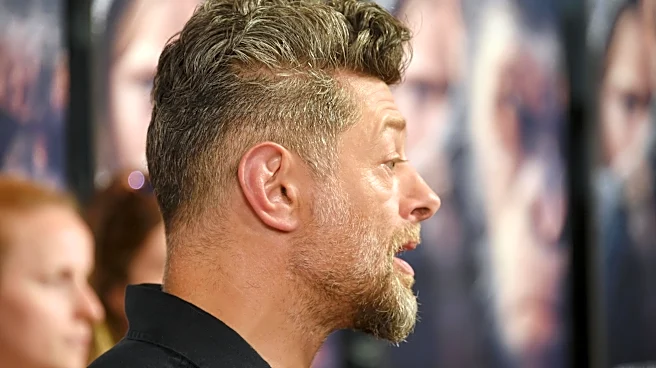
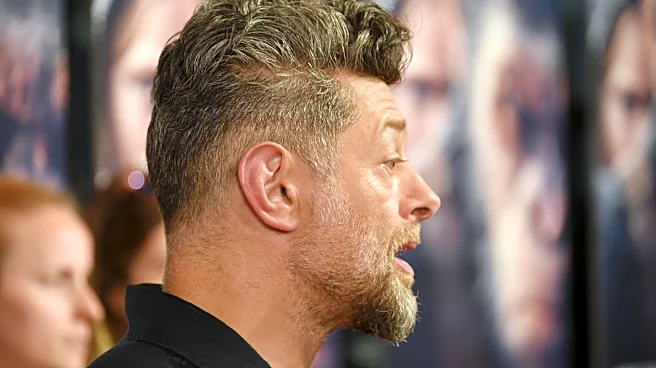
Andy Serkis, known for portraying Gollum in the 'Lord of the Rings' films, has revealed details about a past disagreement with co-stars Elijah Wood and Sean Astin during the filming of the trilogy. The conflict arose because Wood and Astin initially viewed
the scenes involving Serkis's motion-capture performance as mere rehearsals, not fully recognizing it as a legitimate form of acting. Serkis, who arrived on set later than other cast members, felt isolated and like an outsider, which exacerbated the tension. He has been a vocal advocate for the recognition of performance capture as a valid acting form since his role as Gollum. Despite the initial friction, the actors eventually resolved their differences by developing a mutual understanding and respect for each other's work.
Why It's Important?
This account from Andy Serkis highlights a significant historical challenge in the entertainment industry: the acceptance and understanding of new technological acting methods. The initial skepticism from established actors like Elijah Wood and Sean Astin reflects a broader industry struggle to integrate and legitimize performance capture. For the U.S. film industry, this historical context is crucial as motion capture and virtual production continue to evolve and become more prevalent. It underscores the ongoing need for education and dialogue within the industry to ensure that all forms of performance, regardless of the technology involved, are recognized and valued. This recognition impacts contract negotiations, award considerations, and the overall perception of actors working in these specialized fields, potentially influencing how future productions approach casting and crediting for digitally enhanced roles.
What's Next?
The discussion around the legitimacy of performance capture continues to evolve, with figures like Andy Serkis actively promoting its recognition. Serkis is set to reprise his role as Gollum and direct 'The Lord of the Rings: The Hunt for Gollum,' with Elijah Wood also returning. This collaboration signifies a full circle moment, demonstrating how initial disagreements can transform into mutual respect and continued partnership. The ongoing success of films heavily reliant on motion capture will likely further solidify its place in mainstream filmmaking. Future industry awards and guilds may continue to refine their criteria to better accommodate and celebrate performances achieved through advanced digital techniques, ensuring that actors in these roles receive appropriate recognition.
Beyond the Headlines
The historical friction surrounding motion capture, as described by Serkis, touches upon deeper philosophical questions about what constitutes 'acting' in an increasingly digital world. As technology allows for more nuanced and complex digital characters, the line between the actor's physical performance and the digital artist's interpretation becomes increasingly blurred. This raises ethical considerations about the ownership of a performance, particularly when an actor's likeness or movements are digitally manipulated or repurposed. The debate also extends to the emotional and psychological impact on actors who perform in isolation or against green screens, requiring a different kind of imaginative engagement compared to traditional scene work. Ultimately, this ongoing evolution challenges traditional notions of artistry and craftsmanship in the performing arts.