





What's Happening?
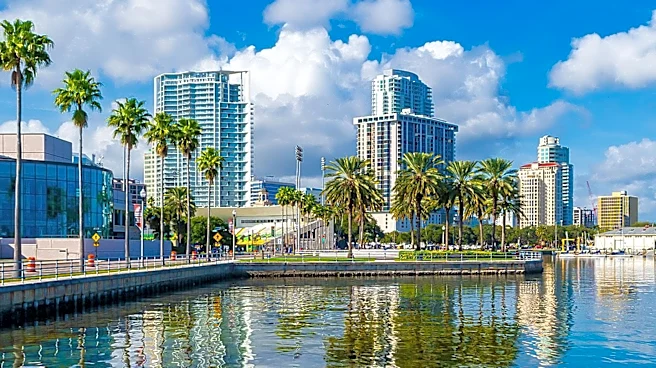
St. Petersburg voters have approved Charter Amendment 2, which extends lease terms at the Port of St. Petersburg from a maximum of 10 years to 25 years. The measure passed with 64 percent of the vote. This change aims to attract greater investment, support
maritime research, and enhance waterfront resilience. The Port of St. Petersburg currently hosts a Coast Guard station, a small cruise line port, and various businesses, and is increasingly becoming a hub for technology and innovation. Chris Stott, founder of Lonestar Data Holdings, a company that operates data centers in space and on the moon, highlighted that the longer lease terms provide the certainty needed for his company to establish a firm presence in St. Petersburg. Allison Barlow, CEO of the St. Pete Innovation District, noted that the port's assets are well-suited for research, innovation, and technology companies looking to test and evaluate products, further growing the city's maritime community.
Why It's Important?
The approval of longer lease terms at the Port of St. Petersburg is significant for the city's economic development and its ambition to become a global center for emerging industries. By offering 25-year leases, St. Petersburg can attract more substantial and long-term investments from companies, particularly those in the technology and maritime research sectors. This increased stability is crucial for businesses like Lonestar Data Holdings, which require significant infrastructure and a long-term commitment to establish operations. The amendment is expected to foster job creation, stimulate economic growth, and enhance the port's capabilities, potentially leading to expansions such as new innovation spaces, workshops, and improved cruise terminals. This strategic move positions St. Petersburg to capitalize on its existing resources and talent pool, aiming to transform it into a leading hub for space-based data and other advanced technologies.
What's Next?
Following the approval of Charter Amendment 2, the Port of St. Petersburg is expected to see increased interest from companies seeking to establish or expand their operations. Businesses like Lonestar Data Holdings, which specializes in space-based data storage, now have the long-term certainty required to invest significantly in the area. The city will likely begin marketing these extended lease opportunities to attract a diverse range of tenants, focusing on technology, innovation, and maritime research firms. This could lead to new development projects at the port, including the construction of specialized facilities, research labs, and enhanced infrastructure. Additionally, the St. Pete Innovation District, which already has a presence at the port, may leverage these longer leases to further its mission of fostering a vibrant ecosystem for technological advancement and economic diversification within the city.
Beyond the Headlines
The decision by St. Petersburg voters to extend port lease terms reflects a broader strategic vision for urban economic development, emphasizing long-term investment and the cultivation of high-tech industries. This move signals a shift from short-term gains to sustainable growth, aiming to create a resilient economic base less susceptible to market fluctuations. Ethically, it raises questions about balancing economic incentives with public access and environmental stewardship of waterfront properties, though the amendment does not alter permitted uses. Culturally, it could transform St. Petersburg into a more prominent hub for scientific and technological innovation, attracting a new demographic of professionals and fostering a knowledge-based economy. This long-term planning could serve as a model for other coastal cities looking to leverage their maritime assets for future-oriented industries while enhancing urban resilience.