

What's Happening?
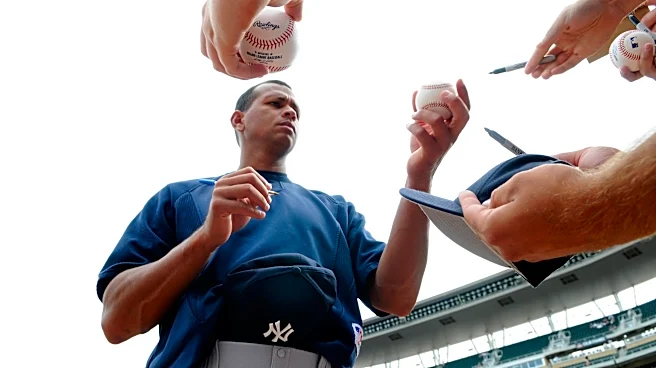
Former New York Yankees star Alex Rodriguez recently commented on his unsuccessful attempt to purchase the New York Mets in 2020, expressing gratitude that Steve Cohen ultimately acquired the team. Speaking at the Axios BFD conference in New York, Rodriguez,
whose group included Jennifer Lopez and businessman Marc Lore, lost out to Cohen, who bought the franchise for a record $2.4 billion. Rodriguez jokingly stated, "I thank God every day for Steve Cohen for buying the Mets. I send him a Christmas card every year." His remarks drew criticism from MLB fans online, with some questioning his financial capacity to have completed the purchase. After missing out on the Mets, Rodriguez and Lore went on to purchase the NBA's Minnesota Timberwolves in 2021 for approximately $1.5 billion. Rodriguez also recently criticized the Yankees' roster construction following their 2026 postseason exit, which extended their World Series drought to 17 seasons.
Why It's Important?
Alex Rodriguez's reflection on the Mets ownership bid highlights the significant financial barriers to owning a major professional sports franchise and the intense competition among high-net-worth individuals for such assets. His comments, while lighthearted, underscore the immense capital Steve Cohen brought to the table, which ultimately secured him the Mets. This event also serves as a reminder of the public scrutiny that accompanies high-profile business dealings involving sports figures, as fans quickly weighed in on Rodriguez's financial capabilities. For the Mets, Cohen's ownership has ushered in an era of unprecedented spending and ambition, aiming to transform the team into a perennial contender. Rodriguez's subsequent acquisition of the Timberwolves demonstrates his continued interest in sports ownership, albeit in a different league, showcasing the broader trend of former athletes transitioning into executive and ownership roles.
What's Next?
While Rodriguez's comments are retrospective, they contribute to the ongoing narrative surrounding sports franchise ownership and the financial power dynamics within professional leagues. For the Mets, Steve Cohen's tenure will continue to be defined by his willingness to invest heavily in player talent and organizational infrastructure, with the ultimate goal of winning a World Series. Rodriguez, as a co-owner of the Minnesota Timberwolves, will continue to be involved in the strategic direction and financial management of that NBA franchise. His public commentary on MLB, particularly regarding the Yankees, suggests he remains an influential voice in baseball discussions, even without an ownership stake in an MLB team. The broader trend of former athletes seeking ownership roles is likely to continue, as they leverage their sports expertise and personal brands in the business world.
Beyond the Headlines
The narrative surrounding Alex Rodriguez's failed Mets bid and Steve Cohen's successful acquisition touches upon deeper themes of wealth, influence, and public perception in professional sports. The fan reactions questioning Rodriguez's financial capacity highlight the public's often-skeptical view of celebrity wealth and business ventures. It also underscores the immense financial power required to compete in the upper echelons of sports ownership, where billionaires like Cohen operate. This dynamic can create a perception of exclusivity and inaccessibility for potential owners who may not possess such vast fortunes. Furthermore, Rodriguez's transition from a legendary player to a sports owner reflects a growing trend of athletes seeking to control narratives and build business empires beyond their playing careers, aiming for long-term influence and financial legacy in the sports industry.