








What's Happening?
SK Hynix, a South Korean chipmaker, has seen overwhelming demand for its $28 billion U.S. share sale, with interest exceeding available shares by more than seven times. This significant investor interest highlights the company's pivotal role in the AI
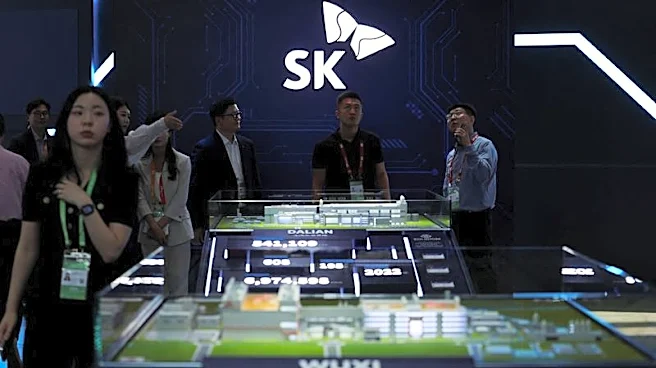
supply chain. The funds raised from this offering will be used to finance new factories and equipment to meet the growing demand for AI chips. This share sale is set to be the world's second-largest, following SpaceX's recent $85.7 billion IPO. SK Hynix's U.S. listing is also expected to help narrow its valuation gap with U.S. rival Micron, which benefits from direct access to a large pool of investors.
Why It's Important?
The oversubscription of SK Hynix's share sale underscores the strong investor confidence in the semiconductor industry, particularly in AI chip production. As AI technology continues to expand, the demand for high-bandwidth memory chips is expected to grow, positioning SK Hynix as a key player in this sector. The company's ability to attract significant investment highlights its strategic importance and potential for future growth. This development also reflects broader trends in the semiconductor market, where companies are racing to meet the increasing demand for AI and data center technologies.
What's Next?
With the successful share sale, SK Hynix is poised to expand its production capabilities, potentially increasing its market share in the AI chip sector. The company is expected to continue its partnership with major U.S. AI chipmakers like Nvidia, which has indicated that the current memory chip shortage may persist due to strong demand. As SK Hynix enhances its production capacity, it may further solidify its position in the global semiconductor market, potentially influencing pricing and supply dynamics.
Beyond the Headlines
The success of SK Hynix's share sale may have broader implications for the semiconductor industry, particularly in terms of investment trends and market competition. As companies like SK Hynix and Samsung Electronics experience historic gains, other semiconductor firms may seek similar opportunities to capitalize on the growing demand for AI technologies. This could lead to increased competition and innovation within the industry, potentially driving further advancements in AI and data center technologies.