
What's Happening?
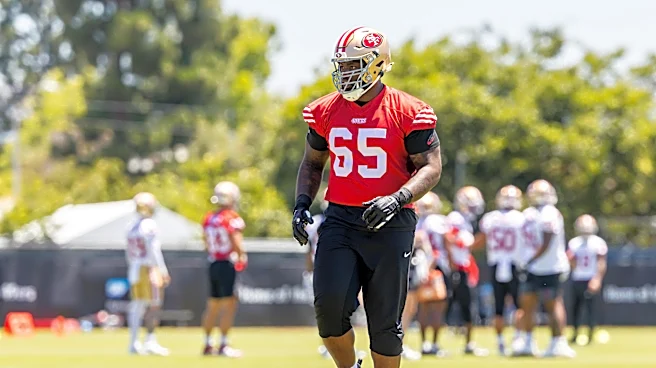
The San Francisco 49ers have activated tight end George Kittle from the Active/Physically Unable to Perform (PUP) list. This development follows Kittle receiving encouraging news from Dr. Neal ElAttrache earlier in the week. Kittle had been sidelined
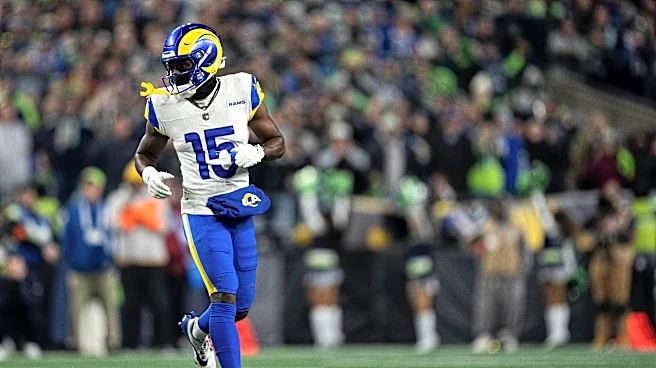
due to a torn Achilles tendon, an injury he sustained in the second week of January. The tear was described as unique, occurring higher up the Achilles rather than near the heel. His activation means he will return to practice, addressing a significant concern he had about accumulating enough practice time to get into football shape before Week 1. The team anticipates he will be able to participate in close to double-digit practices before their game against the Los Angeles Rams. This move indicates positive progress in his rehabilitation and suggests a potential return to play early in the season.
Why It's Important?
The activation of George Kittle is a significant boost for the San Francisco 49ers, as he is a critical component of their offensive strategy. Kittle's ability to return to practice and potentially play early in the season provides the team with a key weapon in both the passing game and as a blocker. His presence on the field can open up opportunities for other offensive players and enhance the team's overall offensive efficiency. For the 49ers, having Kittle available mitigates the need to rely on less experienced players at a crucial position, which is vital for a team with championship aspirations. His recovery timeline, especially given the nature of his Achilles tear, highlights advancements in sports medicine and rehabilitation, offering hope for other athletes facing similar injuries. This also impacts fantasy football leagues and sports betting markets, as Kittle's availability significantly alters projections and odds for the 49ers' early-season performance.
What's Next?
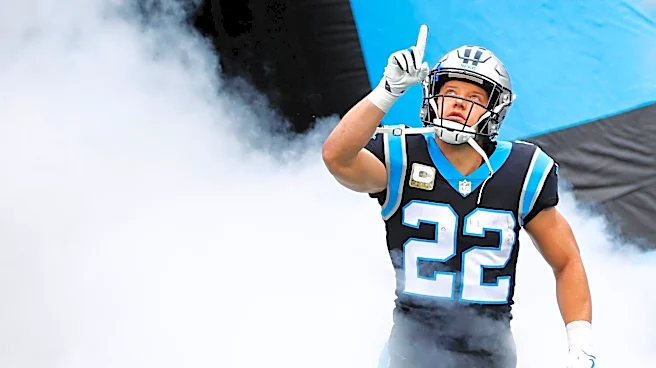
Following his activation, George Kittle is expected to immediately rejoin practice with the San Francisco 49ers. The primary focus will be on his ability to regain full football shape and demonstrate readiness for game-day intensity. While his activation is a positive sign, it does not guarantee his participation in Week 1. The team will closely monitor his progress in practice, particularly his agility, explosiveness, and overall comfort level. Coach Kyle Shanahan and the medical staff will make a final determination on his availability as the season opener approaches. If he is not ready for Week 1, Week 2 is considered a realistic target for his return, especially given the team's game in Australia. The return of Christian McCaffrey to practice on the same day further strengthens the 49ers' offensive outlook, as they aim to have their key players healthy and prepared for the upcoming season.
Beyond the Headlines
Kittle's remarkably swift recovery from a torn Achilles, sustained in January and potentially allowing him to play in September, underscores the evolving landscape of sports medicine and athlete rehabilitation. This rapid return challenges traditional timelines for such severe injuries, suggesting that advanced surgical techniques, personalized recovery protocols, and dedicated athlete commitment can significantly accelerate healing. This could set new benchmarks for how professional sports organizations manage and invest in player health, potentially influencing training methodologies and injury prevention strategies across the league. Furthermore, Kittle's positive attitude and determination throughout his rehab process serve as an inspirational narrative, highlighting the mental fortitude required for elite athletes to overcome significant physical setbacks and return to peak performance. His case may contribute to a broader understanding of Achilles injury recovery, benefiting not only professional athletes but also individuals in the general population facing similar challenges.