









What's Happening?
Raven Resonance, a San Francisco-based startup, has introduced its new smart glasses, Raven Prism, at the Augmented World Expo (AWE) 2026 in Long Beach, California. The glasses feature a unique hot-swappable battery system, allowing users to replace the battery without
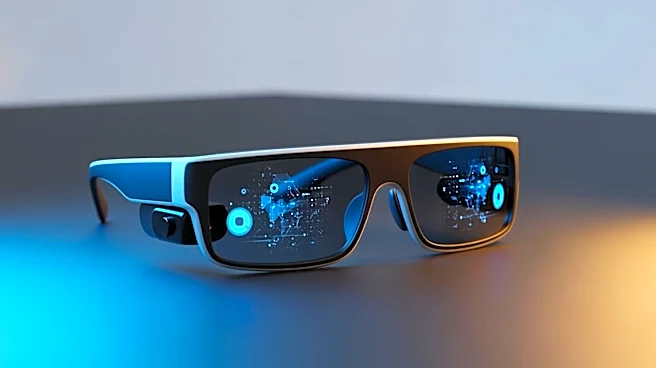
interrupting applications or requiring shutdowns. Marketed as an 'ambient computer,' the Raven Prism operates on RavenOS, a 64-bit Linux-based operating system, and includes a full-color LCoS display, integrated eye tracking, and an onboard camera with a privacy cover. The device emphasizes privacy, processing eye control data locally and minimizing reliance on cloud infrastructure. Raven Prism is a standalone device powered by a quad-core 64-bit ARM processor, supporting Linux ARM64 applications and SSH access. It is designed for creative professionals, developers, and enterprise users, offering a flexible platform with over 25 applications.
Why It's Important?
The introduction of Raven Prism smart glasses marks a significant advancement in wearable technology, particularly in terms of privacy and user autonomy. By processing data locally and reducing dependence on cloud infrastructure, Raven Resonance addresses growing concerns about data privacy in connected devices. The hot-swappable battery system enhances usability, allowing continuous operation without downtime. This innovation could influence the broader tech industry by setting new standards for privacy and functionality in smart wearables. The device's open platform and developer-friendly features may attract a wide range of users, potentially expanding the market for smart glasses beyond niche applications to more mainstream use cases.
What's Next?
Raven Resonance plans to officially launch the Raven Prism later in 2026, with further details on availability, pricing, and developer programs to be announced. As the company prepares for the launch, it may engage with developers and enterprise clients to build a robust ecosystem of applications and use cases. The success of Raven Prism could prompt other tech companies to enhance privacy features and user control in their wearable devices. Additionally, the response from consumers and industry stakeholders will likely influence the future development and adoption of smart glasses technology.